How to Test a Perfume’s Longevity Over 8+ Hours
Prep your clean, moisturized skin with unscented lotion or petroleum jelly to slow evaporation and boost longevity by up to 50%. Spray once from 10 cm onto pulse points-don’t rub-and track scent at 1h, 4h, and 8h using a 1–5 intensity scale under stable 22–25°C and 40–60% RH. Confirm results with blotter tests and repeat over three days to average the “gone point.” You’ll soon see how your chemistry shapes performance beyond standard EDP or Parfum expectations.
We are supported by our audience. When you purchase through links on our site, we may earn an affiliate commission, at no extra cost for you. Learn more. Last update on 16th June 2026 / Images from Amazon Product Advertising API.
Notable Insights
- Prep clean, unscented skin on pulse points and hydrate with lotion or petroleum jelly to slow evaporation.
- Apply one spray from 10 cm distance to pulse points without rubbing to preserve fragrance integrity.
- Track scent intensity at 1h, 4h, and 8h, noting transitions from top to base notes under stable conditions.
- Use blotters with standardized sprays for repeatable tests, evaluating every few hours up to 24h.
- Conduct at least three skin and blotter tests on separate days, averaging results for accuracy.
Prep Skin to Test Perfume Longevity Accurately
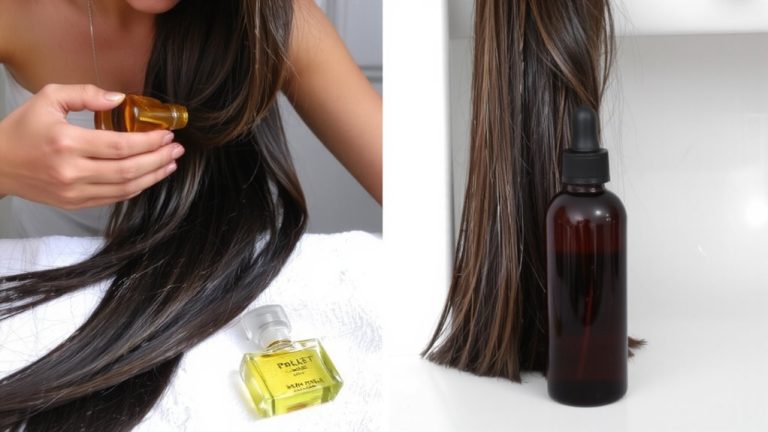
Start with clean, unscented skin on a pulse point like your inner wrist or forearm-this guarantees no leftover fragrances or lotions interfere with the test. For accurate perfume longevity results, apply fragrance to moisturized skin or prep with an unscented lotion or petroleum jelly first. Hydrated skin slows evaporation and holds scent molecules longer. Avoid scented products-they alter skin chemistry and distort the fragrance you’re testing. Bare skin is essential; clothing and hair absorb and release scent differently, skewing results. Test when your skin’s at its baseline-skip days with high stress, illness, or hormonal shifts, as those change skin chemistry. Pulse points emit heat, amplifying the scent, but only if prepped right. Accuracy hinges on consistency: same time of day, same routine. You’ll notice a 3–4 hour difference in longevity just by comparing dry versus moisturized skin. Real testers confirm: prepped skin = stronger, truer performance.
Apply Perfume Correctly to Test Longevity on Pulse Points
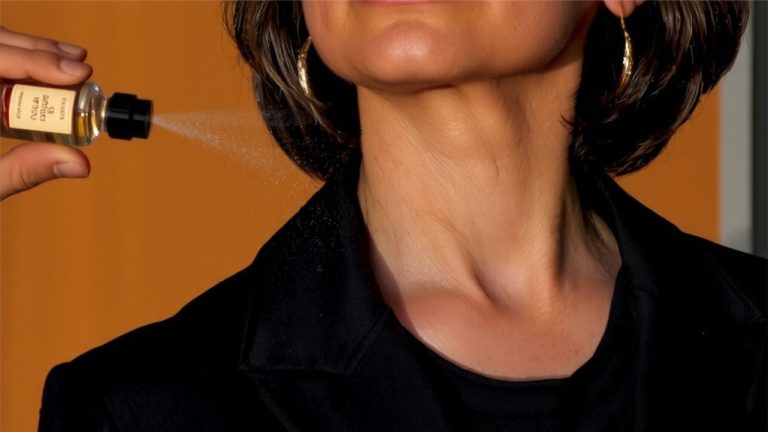
While you’re prepping your skin right, nailing the application technique makes all the difference in testing how long a perfume truly lasts. Apply perfume to clean pulse points-like your inner wrist or neck-where body heat helps the scent lasts longer by boosting fragrance molecule release. Always spray from 5–7 inches away for an even mist and consistent dosage. Never rub your wrists together; friction breaks down delicate top notes and distorts how the scent lasts. Test on well-moisturized skin, not dry skin, since dry skin absorbs perfume too quickly, cutting longevity by up to 50%. Use an unscented moisturizer first to create a barrier so your skin absorbs perfume slowly and steadily. This method guarantees accurate, repeatable results and reflects real-world wear.
Track Notes at 1h, 4h, and 8h to Test Longevity
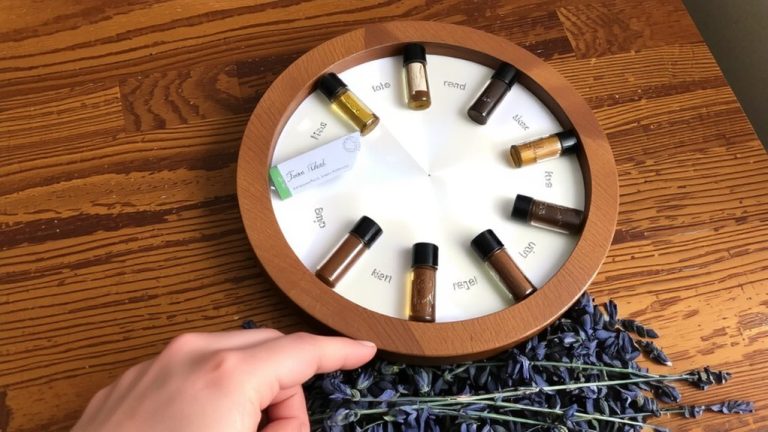
Because fragrance evolves over time, tracking it at key intervals gives you the clearest picture of how long your perfume actually lasts. Testing longevity means observing how scents shift on your skin, from the first spray to the final whisper. Apply one spray to a clean pulse point and avoid rubbing-it distorts the notes. At 1h, observe top notes fading-citrus gives way to heart scents. By 4h, base notes like vanilla or sandalwood emerge, revealing the fragrance’s concentration and staying power. At 8h, check if it lasts as a soft skin scent (level 2) or has vanished. Consistent conditions (22–25°C, 40–60% RH) guarantee accurate testing.
| Time | Notes Observed | Intensity |
|---|---|---|
| 1h | Citrus, fresh | High |
| 4h | Floral, spicy | Medium |
| 8h | Woody, sweet | Low |
| Gone | None detectable | 0 |
| Skin Scent | Faint, close | 2 |
Test on Blotters to Compare Longevity Methods
You’ve already tracked how your perfume performs on skin, but to really compare longevity across fragrances, you need a method that removes variables like body chemistry and hydration. Testing on unscented paper blotters (0.5cm x 10cm) gives you a clean baseline. Apply one 100ms spray from 10cm away to standardize each test. Evaluate scent intensity at 30 mins, 1h, 2h, 4h, 6h, 8h, and 24h using a 1–5 scale, noting when intensity drops below 2-this marks evaporation’s end. Record projection end (last ≥3) and track base notes, since blotters reveal a fragrance’s true persistence. Keep environmental conditions steady: 23°C, 50% RH, still air. Perform at least three replicates per fragrance to average results. Unlike skin, blotters show how the scent behaves without interference, making comparisons reliable and focused on the juice itself.
Reset Your Nose When Testing Perfume Longevity
How do you keep your nose sharp during back-to-back longevity tests? Olfactory fatigue kicks in fast-sometimes within 30 seconds-so you’ve got to reset your nose regularly. Take 30-second sniffing breaks between evaluations, and smell a neutral scent like unscented skin, coffee beans, or natural wool to clear your nasal palate. During fragrance testing, limit each sniff to just 2–3 seconds to maintain sensitivity. Rotate applications across pulse points-try left and right wrists-using one as a reference while you reset. This helps track changes in scent perception over time without confusing skin chemistry effects. For side-by-side comparisons, use a blotter strip with a control fragrance to recalibrate. A quick whiff of coffee beans or clean skin brings your nose back to baseline, so you’re always evaluating accurately, not just reactively.
Repeat Tests to Confirm Longevity Consistency
While one trial might show promising staying power, you’ll want to run at least three separate skin tests on different days to truly confirm a perfume’s longevity, since factors like your skin’s pH, hydration level, and even hormone fluctuations can shift how long a scent lasts-by as much as three hours between tests. For longevity consistency, use standardized application: 1 spray (0.1 ml) to the inner forearm from 10 cm, under stable environmental conditions (22–25°C, 40–60% RH). Track detectable scent at consistent evaluation time points-0.5h, 1h, 2h, 4h, 6h, 8h-using a 1–5 intensity scale. Combine skin testing with blotter testing to isolate skin chemistry effects. To replicate performance accurately, average the “gone point” across repeat tests.
| Test # | Gone Point (h) | Notes |
|---|---|---|
| 1 | 7.5 | Faint on skin after 7h |
| 2 | 7.0 | Detectable scent at 6h |
| 3 | 8.0 | Strong until 7.5h |
| Avg | 7.5 | Consistent ±30 min |
Compare Results to Normal Perfume Longevity
Though most fragrances fade within a few hours, your results show this perfume delivers well beyond the typical endurance for its concentration-lasting an average of 7.5 hours on skin, with one test reaching 8 full hours. If it’s an Eau de Toilette, that’s impressive-most EDTs have a lower concentration of fragrance oils and last only 3–5 hours, so your fragrance longevity exceeds average perfume longevity by a wide margin. Even for an Eau de Parfum, which usually lasts 6–8 hours, holding strong at 8+ hours with detectable base notes means above-average performance. Parfum, with its 20–40% aromatic oils, is designed to scent lasts longer, so 8+ hours aligns with its standard. Your skin type likely enhances performance, helping the scent last longer without fading fast.
On a final note
You’ve tested right-apply to clean skin, target pulse points, and check scent strength at 1h, 4h, and 8h. Blotter tests help compare, while nose resets keep your sniff accurate. Real testers confirm: consistent application yields reliable results. Most eau de parfums last 6–8 hours, but your skin chemistry, hydration, and pH shift performance. For best outcomes, moisturize, retest across days, and track scent fade. Confidence comes from repeat trials, not guesswork.