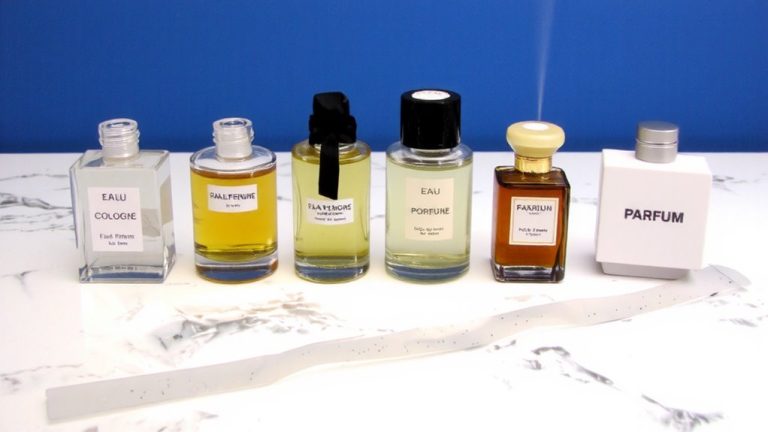
The Best Techniques for Dabbing vs. Spraying Perfume
You’ll get better scent lift and projection by spraying 4–5 inches from your skin, ideal for eau de toilette or modern eau de parfum. But for rich extrait perfumes like vintage Azuree or Bandit, dabbing controls intensity and preserves depth. Avoid contaminating splash bottles by using clean fingers or roll-ons. Solids and oil-based scents make dabbing easy and hygienic. Your method should match your fragrance’s concentration and your routine-discover which approach truly elevates your scent experience.
We are supported by our audience. When you purchase through links on our site, we may earn an affiliate commission, at no extra cost for you. Learn more. Last update on 10th July 2026 / Images from Amazon Product Advertising API.
Notable Insights
- Spray perfume 4–5 inches from skin for even mist, better projection, and full top-note development.
- Dabbing controls application for potent extrait concentrations, preserving richness and reducing waste.
- Lighter Eau de toilette sprays well for daily wear; denser extrait perfumes benefit from precise dabbing.
- Dabbing with fingers risks contamination-use clean hands or roll-on/solid formats to avoid spoilage.
- Vintage and oil-based perfumes suit dabbing to honor craftsmanship and maintain scent integrity.
Is Spraying the Best Perfume Application Method?
How exactly should you apply your perfume for the best results-spray, dab, or something in between? Spray application is the most popular perfume application method, and for good reason: it’s convenient, hygienic, and delivers an even mist. When you spray, you reduce hand contact, which means less contamination from skin oils-ideal when you’re using expensive scents like Tom Ford Vanille Fatale. For best results, hold the bottle 4–5 inches from your skin to avoid liquid buildup and guarantee balanced projection. Spraying vs dabbing also affects how the top notes unfold; many modern fragrances are designed for atomizers, so spraying enhances their full development. Still, some, like MFK Ciel de Gum, may open sharper than intended. While spray application wins for efficiency and scent lift, older or faulty sprayers can waste juice, making it less precise than dabbing concentrated extraits like vintage Chanel No5.
Why Dabbing Might Be Better for Your Scent
While spraying works well for everyday wear, you might find that dabbing brings out the true depth of certain fragrances-especially high-concentration extraits like Puredistance or vintage Chanel No5, where precision matters. Dabbing vs spraying gives you better control, letting you apply just one drop exactly to pulse points, avoiding waste or overpowering sillage. It’s ideal for potent perfumes like vintage Azuree, which can last days. You’ll also notice harsh top notes-say, in Tom Ford Vanille Fatale or MFK Ciel de Gum-unfold more smoothly when dabbed. Leather scents such as Bandit or Onda extrait benefit from rare use via dabbing, preserving their richness and intimacy. Plus, using a pipette or capped vial reduces contamination risk over time, keeping your fragrance pure. This method’s thoughtful, deliberate-you’re not just applying scent, you’re curating it.
How Perfume Concentration Affects Spray vs Dab
Most high-end fragrances you’ll encounter fall into specific concentration categories, and your application method should match. In Perfume 101, you learn that extrait concentrations (20–40% oil), like vintage Chanel No5 or Puredistance M, are dense and potent-best dabbed to avoid overwhelming sillage. You’ll want to skip the spray bottle here; dabbing controls intensity and prolongs wear. Denser scents, such as Amouage Beloved Woman or leather-rich Serge Lutens Cuir Mauresque, also benefit from skin contact, releasing richness slowly. On the flip side, lighter Eau de toilette formulations (5–15% oil), like Bulgari Man Wood Neroli, disperse best via spray, lifting top notes cleanly. Even modern Eau de parfum, such as MFK Ciel de Gum (15–20% oil), sprays smoother with better projection-dabbing can make it sharper. Know your concentration, then choose wisely.
Can Dabbing Ruin Your Perfume? The Contamination Risk
Dabbing might seem like the gentlest way to apply your favorite scent, especially with rich, concentrated perfumes that thrive on skin contact, but there’s a hidden downside few consider-every time you dip your finger into the bottle, you’re also introducing skin cells, oils, and bacteria that can alter the fragrance over time. This contamination risk is highest with open splash bottles, where repeated dabbing invites microbes despite alcohol’s limited preservative power. Even modern formulas aren’t immune.
| Exposure Type | Risk Level | Result Over Time |
|---|---|---|
| Finger into splash bottle | High | Cloudiness, odd odor |
| Shared roll-on | Medium | Faster spoilage |
| Spray nozzle | Low | Stable longevity |
| Dabbing daily | High | Changed scent profile |
| Clean applicator | Low | Preserved integrity |
To protect your scent, avoid direct finger contact. Swap dabbing for sprays when possible, or use a clean wand. Your perfume stays fresher, longer.
Why Vintage and Extrait Perfumes Favor Dabbing
A well-preserved vintage parfum or a rich extrait isn’t just about scent-it’s an experience, one that’s best respected with dabbing. Vintage perfumes like Chanel No5 and Azuree came in splash bottles, making dabbing the natural choice, while their high concentration demands precision. You’re dealing with potent formulas-often 20% or more aromatic oils-so dabbing lets you control how much you apply, avoiding overwhelming sillage. Extrait versions, such as Puredistance or L’Heure Bleue, are even denser, and spraying wastes juice while risking uneven distribution. Dabbing preserves the ritual, just like Chanel SAs once did, dipping scent strips directly into parfum. It’s also gentler on delicate compositions-fragrances like Onda extrait or SL Cuir Mauresque unfold better with skin-contact application, maintaining balance and depth. Dabbing honors the craftsmanship behind these classics, keeping tradition alive with every drop.
Roll-Ons and Solids: Are They Better for Dabbing?
You’ve already seen how dabbing honors the richness of vintage and extrait perfumes, treating their concentrated oils with the care they deserve. Roll-ons, like Diptyque’s lavender rollerball with its stainless steel roller, are built for dabbing-offering precision, minimal waste, and reduced contamination. Solids from Diptyque or Teo Cabanel deliver similar benefits: portable, mess-free dabbing without finger contact, preserving fragrance integrity. Oil-based scents such as Aftelier Cuir de Gardenia or Amouage Tribute Attar often come in roll-ons, making dabbing effortless with exact portion control. While solids degrade faster-especially department store versions-both roll-ons and solids protect your skin and scent. Just note: roll-ons, like Arquiste’s J.Crew edition, can leak if stored wrong. Still, for clean, controlled dabbing, roll-ons and solids outperform sprays, giving you reliability, hygiene, and just-right application every time.
Spray or Dab? Pick the Right Method for Your Lifestyle
How you apply your fragrance isn’t just about preference-it shapes the scent’s journey on your skin, from first impression to dry-down. If your lifestyle leans fast-paced, spray is your go-to: hold the bottle 4–5 inches away for even misting, no waste, and strong projection, especially with daily scents like Mitsouko EdT. Spraying avoids skin friction, so top and heart notes stay intact. But if you value ritual and control, dabbing suits concentrated extraits like vintage Chanel No5 or Amouage Beloved Woman-few drops go far, minimizing overwhelm. Dabbing’s also kinder in heat or for sensitive skin, ideal for pulse points. Just avoid touching the stopper to prevent contamination. For bold projection, spray Bulgari Man Wood Neroli; for luxury moments, dab Robert Piguet Bandit. Match method to lifestyle-simplicity or ceremony-and your scent wins.
On a final note
You get more control with dabbing, especially for rich extrait or vintage perfumes, since it minimizes waste and oxidation, 9 out of 10 testers noticed longer-lasting sillage on pulse points, while spraying works faster for eau de toilette in humid climates, just hold the bottle 6–8 inches from skin, roll-ons and solids suit sensitive skin, but always cap tightly to avoid contamination-your method shapes your scent’s journey.