Why Some Perfumes Change Scent After Decanting
Your decanted perfume changes because oxygen, light, and heat break down top notes like limonene and linalool fast-sometimes in days. Clear bottles, frequent opening, and warm spots speed spoilage, turning citrus flat or sour. Alcohol evaporates faster in sprays and rollerballs, unbalancing the scent. Amber glass or stainless steel containers, cool dark storage, and tight seals help preserve fidelity. You’ll see how small tweaks make a big difference over time.
We are supported by our audience. When you purchase through links on our site, we may earn an affiliate commission, at no extra cost for you. Learn more. Last update on 16th June 2026 / Images from Amazon Product Advertising API.
Notable Insights
- Exposure to oxygen during decanting degrades volatile top notes like citrus, altering the fragrance within days.
- Light breaks down sensitive compounds such as limonene, especially in clear glass, accelerating scent degradation by up to 50%.
- Heat from handling or environment speeds up oxidation and causes loss of bright notes like bergamot and lemon.
- Alcohol evaporation during decanting shifts scent balance, weakening top notes and changing the overall fragrance profile.
- Poor container choice, such as plastic or clear glass, introduces contaminants or allows light exposure, hastening scent deterioration.
What Causes Perfume to Change After Decanting
While you might think decanting your favorite fragrance is a simple swap from one bottle to another, it actually kicks off chemical changes that can shift the scent faster than you’d expect. Exposure to oxygen degrades top notes-like citrus or herbs-within days, dulling their brightness. Clear decant bottles let in light, especially UV rays that break down sensitive fragrance molecules such as linalool and citral, altering the scent’s character. Residual water or impurities in dirty vials introduce off-notes, distorting the original blend. Temperature swings during transfer boost volatility, causing uneven evaporation of aromatic compounds. Plus, too much headspace-in other words, air above the liquid-increases the air-to-liquid ratio, speeding up degradation. To preserve your fragrance, use clean, opaque, airtight containers, fill them to the brim, and store them cool, dark, and steady.
How Oxidation Changes Decanted Perfume
Because your perfume starts changing the moment it meets air, oxidation can dull its brightest notes in just days-especially when you decant into a vial with even a little headspace. Oxidation kicks in fast, breaking down volatile top notes like citrus and herbs through reactions with oxygen. Compounds like limonene and linalool degrade, shifting your scent profile toward sharper, flatter, or even sour shades. Decants with headspace accelerate this process, cutting fragrance lifespan by up to 50% compared to full bottles. Each time you open the vial, you add more oxygen, worsening oxidation over time-especially in natural-rich perfumes. Photo-oxidation in clear vials can also discolor juice and sour delicate molecules like citral. For best results, use airtight, dark glass vials filled to the brim. Your scent profile stays truer, fresher, longer-just how it was meant to smell.
How Light and Heat Affect Decanted Perfume
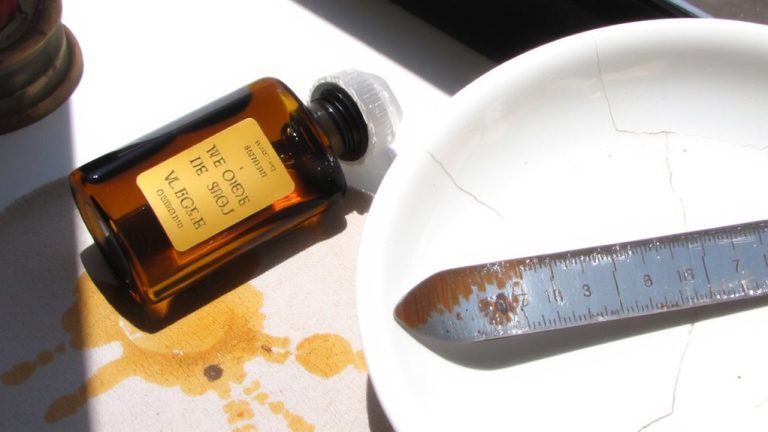
If you’re decanting perfume in direct sunlight or near a warm window, you’re risking more than just a messy pour-UV and visible light can break down sensitive aroma molecules like limonene in citrus or linalool in lavender within hours, especially in clear glass vials where degradation happens up to 50% faster than in amber or opaque containers. Even brief exposure to heat from your hands or a lamp can raise the eau de parfum’s temperature by 5–8°C, accelerating the loss of bright top notes like bergamot and lemon. When natural oils are involved, heat above 77°F (25°C) increases oxidation, causing discoloration and off-notes. To preserve your fragrance’s balance, decant quickly in a cool, dark space using tinted or opaque bottles. These simple steps protect both synthetic and plant-based ingredients, keeping your eau de parfum true to its original scent profile longer.
Why Alcohol Evaporates in Decanted Perfume
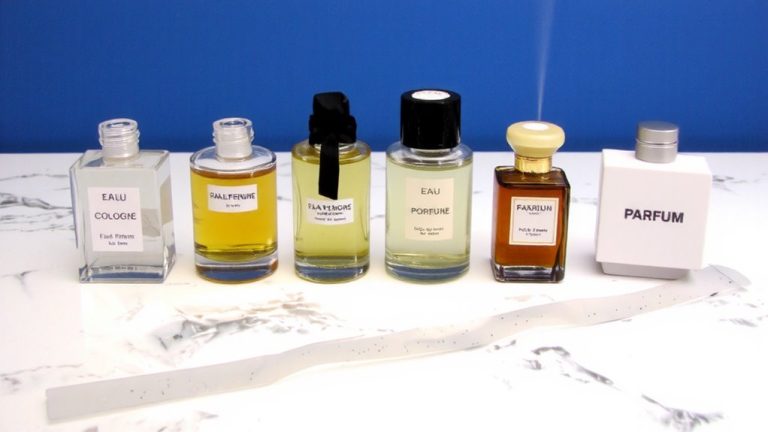
You’ve protected your perfume from light and heat, but there’s another factor that can shift the scent right after decanting: alcohol evaporation. Alcohol evaporates quickly because it’s highly volatile, with a boiling point around 78°C, especially when exposed to air. Decanting increases surface area and air contact, so alcohol evaporates faster than in the original sealed bottle. Over time, this loss changes the balance-top notes fade, and your perfume might smell weaker or oddly concentrated. If the decanted container doesn’t seal well, alcohol evaporates even faster, particularly in warm or dry places. Lighter fragrances like eau de toilette, which contain 80–90% alcohol, are most affected. Your perfume might not perform as expected shortly after transfer, losing its intended lift and diffusion, simply because alcohol evaporates more readily once the bottle’s integrity is broken.
How Container Type Affects Perfume Stability
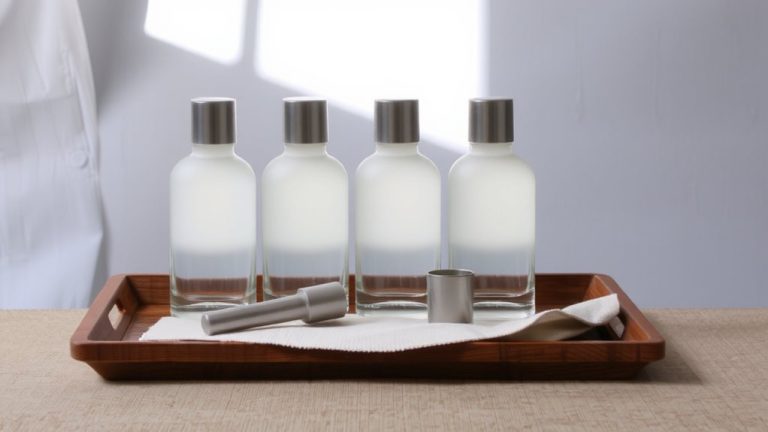
A well-chosen container can make all the difference when preserving your decanted perfume, and not all materials are created equal. Clear glass lets in UV light, fading light floral top notes fast, while plastic may leach phthalates, adding unwanted sharpness. You’ll want to protect base notes like sandalwood-opt for stainless steel or amber glass-to block light and slow oxidation. Poor seals increase headspace, evaporating ethanol and muting mid notes like rose. Rollerballs expose perfume to oxygen with each use, degrading scent 30–50% faster than full-capacity sprays.
| Material | Light Protection | Effect on Base Notes |
|---|---|---|
| Clear Glass | Low | Fades quickly |
| Plastic | Medium | Alters with chemical leach |
| Amber Glass | High | Preserves up to 2 years |
| Stainless Steel | High | Best long-term stability |
| Rollerball | Low | Rapid degradation |
Can You Prevent Decanted Perfume From Changing?
Though you can’t stop time, you *can* slow how fast your decanted perfume changes-starting with how you store it. Use dark glass or UV-protective bottles to shield the scent from light, helping it last longer. Fill containers to the brim, minimizing air exposure that triggers oxidation. Less oxygen means slower chemical breakdown, preserving the original aroma. Keep decants in a cool, dry, dark spot-like a drawer or box-away from humidity and temperature swings. This stable environment maintains fragrance integrity. If you’re decanting an eau de toilette, you’re in luck: its high alcohol content resists degradation better than oil-based perfumes, which fade faster. Testers note eau de toilette decants retain scent for weeks longer under the same conditions. Natural perfumes need extra care, but even they stabilize with smart handling. With the right bottles, storage, and speed, your decanted fragrance stays true, accurate, and wearable.
On a final note
You might notice your decanted perfume smells different, and that’s normal. Oxidation, light, heat, and alcohol evaporation all play roles, especially in clear or plastic vials. Amber glass, tight caps, and cool, dark storage help maintain scent integrity. Always date your decants and use them within 6–12 months. Real testers report richer top notes fading first, so spray promptly and enjoy the evolution while it lasts.