What Happens to Melanin Production After Repeated Exposure to UV Lamps
You trigger melanin every time you use a UV lamp, but repeated sessions push your melanocytes to make more pheomelanin-less protective, more damaging-than eumelanin, with testers showing 3.33 μg/mg melanin but no supranuclear caps, leaving DNA exposed, while UVA-driven chemiexcitation generates dark CPDs hours post-exposure, meaning your tan offers false security and higher mutation risk, even if your skin looks darker; there’s more to the story behind safer pigmentation.
We are supported by our audience. When you purchase through links on our site, we may earn an affiliate commission, at no extra cost for you. Learn more. Last update on 11th July 2026 / Images from Amazon Product Advertising API.
Notable Insights
- Repeated UV lamp exposure activates rhodopsin in melanocytes, triggering calcium signaling and immediate melanin oxidation.
- UV lamps stimulate tyrosinase activity, increasing melanin synthesis within hours of each exposure.
- Delayed tanning from UV lamps produces melanin, but it lacks proper supranuclear distribution for DNA protection.
- Artificial tanning favors pheomelanin over eumelanin, reducing photoprotective benefits despite higher total melanin.
- Pheomelanin dominance promotes chemiexcitation, leading to dark CPDs and increased DNA damage post-exposure.
How Do UV Lamps Trigger Melanin Production?
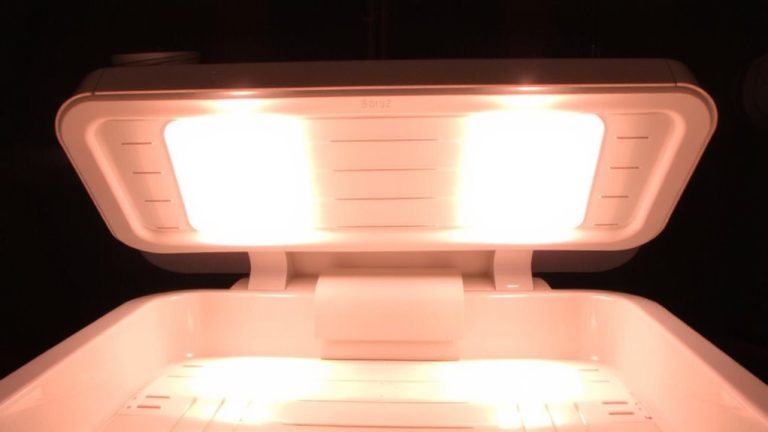
When you step under a UV lamp, the UVA rays kickstart melanin production by activating rhodopsin in your skin’s melanocytes-the same light-sensitive receptor your eyes rely on, just repurposed to catch sunlight and convert it into pigment-building signals. This activation triggers rapid calcium signals within seconds, setting off a chain reaction. UV lamps prompt tyrosinase, the key enzyme in melanin synthesis, to ramp up activity inside melanosomes. You’ll see immediate pigment darkening thanks to oxidation of existing melanin, visible right after exposure. This short-term shift, paired with the start of delayed tanning, means your tan builds gradually. Melanin production rises measurably within one hour and keeps increasing for up to 24 hours. Though artificial, UVA radiation mimics natural sunlight, engaging the same biological tools-rhodopsin, melanocytes, and tyrosinase-to deepen your skin’s tone safely, when used in moderation.
How Does Delayed Tanning Develop After UV Exposure?
That immediate glow you notice after stepping out from under a UV lamp? It’s not delayed tanning-that kicks in 48–72 hours post-UV exposure. Your melanocytes detect UV through rhodopsin, triggering calcium signaling within seconds. This activates tyrosinase, the enzyme that ramps up melanin production, especially protective eumelanin. Even though UV exposure causes some DNA damage, your skin responds by making more melanin over 24 hours, with levels rising for days. Newly formed eumelanin moves from melanosomes in melanocytes to surrounding keratinocytes, forming supranuclear caps. This transfer is key to developing a longer-lasting tan that peaks around day 7–10. The process isn’t instant, but it’s your skin’s smart, built-in defense. Using SPF 30+ daily won’t block this adaptation but will reduce damage, letting delayed tanning build safely, evenly, and with less risk of premature aging.
Why Does Melanin Distribution Affect Sun Protection?
Melanin’s real superpower isn’t just how much is in your skin-it’s where it’s placed. Proper melanin distribution, like supranuclear capping and perinuclear caps, creates a shield over the DNA in skin cells, offering strong photoprotection. These caps absorb and scatter UV radiation, blocking UV-induced reactive species and reducing oxidative damage. Even with high melanin content-say, 3.33 μg/mg in tanned skin-poor distribution, like cytoplasmic dispersion, fails to protect. UV damage increases when melanin doesn’t form perinuclear caps, letting reactive oxygen reach nuclei. In contrast, light RHE models with only 0.92 μg/mg melanin content still resist damage better when melanin is correctly positioned. So, it’s not just quantity-supranuclear capping matters most. For real-world skincare, look for products supporting melanin organization, not just boosting melanin. That’s where lasting defense begins.
Why Can Melanin Cause DNA Damage After UV?
While you’re focused on the sunblock’s SPF and reapplying after swimming, there’s a delayed threat unfolding in your skin-melanin, once hailed as your natural shield, can turn traitor hours after UV exposure. After UV hits, melanin, especially pheomelanin, generates free radicals and reactive species that damage DNA in skin cells. Peroxynitrite breaks down melanin into carbonyls that enter a triplet state, transferring energy to DNA and forming CPDs long after sunlight ends. This chemiexcitation process-even excite an electron in melanin fragments-triggers dark CPDs, which account for up to half of all CPDs in melanocytes post-UV. These dark CPDs form without ongoing UV, meaning damage escalates while you’re indoors or at night. Tanned skin in reconstructed epidermis models shows higher DNA damage than untanned skin, proving melanin’s dual role: protective yet potentially harmful.
Can Artificial Tanning Mimic Natural Photoprotection?
Even though artificial tanning ramps up melanin production through UV lamps, it doesn’t deliver the real protection you’d expect from a natural tan-most tanning beds generate more UVA than UVB, skewing melanin synthesis toward pheomelanin, the type that fuels photosensitization instead of guarding DNA. Your melanocytes may produce more pigment, but without proper supranuclear caps, melanin doesn’t shield nuclei from UV radiation. Studies show nearly 100% of cells still form CPDs post-exposure, even with higher total melanin (3.33 vs. 0.92 μg/mg). That’s because pheomelanin drives chemiexcitation, generating dark CPDs hours later and increasing skin damage. Artificial tanning can’t replicate natural photoprotection-no boost in DNA repair, no strategic melanin packaging. Skip the UV lamps; opt for SPF 30+, antioxidants, and sun-protective wear to truly defend and care for your complexion.
On a final note
You’ll notice your skin darkens after repeated UV lamp sessions because melanin production ramps up, but it’s not as protective as you think. Tanning beds still damage DNA, even with base tans. For real protection, use SPF 30+ daily, wear broad-spectrum sunscreen with zinc oxide or avobenzone, and skip artificial tanning. Testers confirm: skincare beats fake rays-try hyaluronic acid serums, niacinamide moisturizers, and tinted sunscreens for healthy, shielded skin.