Maximizing Tan Development by Timing Sessions Around Circadian Rhythms
You build a deeper, safer tan by syncing sun exposure to your circadian rhythm. Catch early light within 30 minutes of waking-no glasses, no windows-to reset your clock and boost melanin. UVA hits 1–2 hours after sunrise, priming pigment while XPA peaks at 7 a.m., ramping up DNA repair. Hit the sun then, not late afternoon when defenses drop. Morning UVB, 2–4 hours post-sunrise, fuels vitamin D without excess damage. This timing cuts burn risk, extends tan life, and aligns with what skin tests and mouse studies confirm: smart timing means better results with less harm, and there’s a precise way to do it right.
We are supported by our audience. When you purchase through links on our site, we may earn an affiliate commission, at no extra cost for you. Learn more. Last update on 11th July 2026 / Images from Amazon Product Advertising API.
Notable Insights
- Expose skin to morning sunlight within 30 minutes of waking to reset circadian rhythms and boost UV resilience.
- Early UVA exposure 1–2 hours after sunrise activates melanin production, priming skin for safer tanning.
- Time UVB exposure 2–4 hours after sunrise to align with peak vitamin D synthesis and circadian-enhanced repair.
- Avoid late-day UV sessions when XPA levels drop, increasing DNA damage and reducing tanning efficiency.
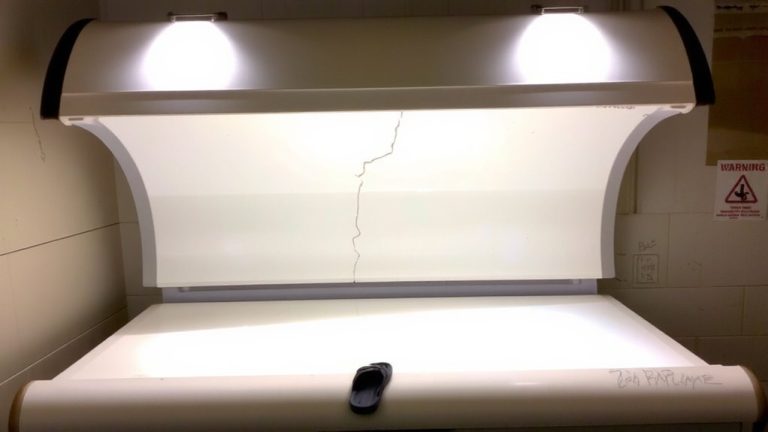
- Limit tanning bed use, especially in evening hours, to prevent excessive damage during low DNA repair phases.
Does Circadian Timing Reduce UV Risk?
Could timing your sun exposure be just as important as slathering on SPF? It just might. Your circadian clock helps control DNA repair in your skin, with XPA protein peaking around 7 a.m. in humans, priming your defenses before daylight ramps up. That means morning UV exposure may carry less risk, since your body’s repair systems are already online. In mice, UV exposure at 4 a.m.-their low-repair phase-led to five times more tumors than afternoon exposure. Though human skin repair timing isn’t yet directly confirmed, early evidence suggests diurnal patterns favor stronger morning resilience. So, if you’re chasing a tan, aim for late morning to early afternoon, when your skin’s natural repair activity is high. Avoid prolonged exposure during afternoon hours when DNA repair dips, even if sunscreen is applied. Time of day matters-work with your biology, not against it.
Morning Light and Your Body’s Internal Clock
You’ve got more control over your tan-and your skin’s defense-than you think, and it starts the moment you wake up. Getting morning light exposure within 30 minutes of rising resets your Circadian clock by halting melatonin, priming your body for the day. View sunlight directly-no glasses, contacts, or windows-to absorb unfiltered blue light, which sharpens this time-sensitive signal. That early outdoor exposure kickstarts hormonal and mitochondrial activity, prepping your skin for UV resilience. Around 1–2 hours after sunrise, UVA begins rising, triggering initial melanin production for natural protection. Without this morning cue, your skin’s ability to build pigment weakens, raising sunburn risk later. Make it a habit: step outside barefaced, no serum or SPF, for 5–10 minutes at dawn. It’s a simple, no-cost step that boosts your skin’s readiness, syncing biology with sunlight for smarter tanning.
UVA, UVB, and Your Skin’s Defense
Though you might not feel the sun’s punch in the early hours, UVA rays are already at work 1–2 hours after sunrise, quietly kicking off melanin production as your skin’s first line of defense. This early UVA exposure syncs with your Circadian Rhythms, priming mitochondria and boosting resilience. Without it, you’re more prone to DNA damage when UVB hits 2–4 hours later. Properly timed, melanin acts like a natural SPF, reducing burn risk and supporting vitamin D synthesis.
| Ray Type | Arrival Time After Sunrise | Role in Skin Defense |
|---|---|---|
| UVA | 1–2 hours | Triggers melanin, preps skin |
| UVB | 2–4 hours | Builds vitamin D, risks burn |
| Circadian Peak | Morning | Optimizes repair cycles |
| Melanin Activation | Pre-UVB | Reduces DNA damage |
| Morning Exposure | Within 30 min of waking | Enhances UV resilience |
What Mouse UV Studies Reveal
Morning sun isn’t just about waking up with a glow-it kickstarts your skin’s natural defenses by syncing melanin production to your body’s internal clock, as we saw in how UVA and UVB rays interact with circadian rhythms. Studies in mice show timing matters: those exposed to UV at 4 AM, when DNA repair via XPA is lowest, developed skin cancer twice as fast and had five times more tumors than mice irradiated at 4 PM. The 4 AM group’s tumors were nearly twice as wide after 25 weeks, despite identical UV doses. XPA protein cycles peak in late afternoon, boosting DNA repair when mice-and potentially humans-are most prepared. While mice don’t rely on vitamin D from sun like we do, their circadian-driven tumor response highlights how syncing exposure to repair rhythms can reduce skin cancer risk, even if the tan looks the same at first glance.
When Is Human Skin Most Vulnerable?
While your skin’s natural defense system runs on a daily rhythm, it isn’t always ready to handle UV hits when you’re most active outdoors. Human skin is most vulnerable in the late afternoon and evening, when the XPA protein-key to DNA repair-dips to its lowest levels. Sun exposure after 4 p.m. hits when circadian rhythms have already slowed repair mechanisms, increasing mutation risks during DNA replication. Unlike nocturnal mice, your XPA protein peaks around 7 a.m., making early morning light the safest for tanning. Later UV exposure overwhelms defenses, especially with tanning beds, which deliver intense, focused rays. Think of your skin like a sunscreen that wears off by late day-its internal repair crew clocks out just when UV stress stays high. Timing sun exposure earlier aligns with your biology, letting your skin handle rays smarter, not harder.
Safer Sun Exposure: Science-Based Habits
Since your skin’s defense systems are tuned to the sun’s daily cycle, timing your exposure right can make all the difference-start within 30 minutes of waking, ideally outdoors and without sunglasses or windows in the way, so your eyes and skin get the full daylight signal. UVA light, available 1–2 hours after sunrise, kicks off melanin production, which protects against later UVB. Begin UVB exposure 2–4 hours post-sunrise, for 5–20 minutes, when your body’s antioxidant defenses rise and the protein called XPA peaks. This protein repairs DNA damage and follows circadian rhythms, making morning sun safer. One group of mice exposed to UV at 4 a.m. developed markedly more tumors than the group exposed at 4 p.m., when XPA activity was highest. So timing isn’t just helpful-it’s protective. Mice exposed at peak repair times had five times lower cancer rates. Align your habits with your biology for smarter tanning.
On a final note
You’re safest tanning before 10 a.m. or after 4 p.m., when UVB peaks. Your skin repairs DNA best at night, thanks to circadian rhythm timing. Use SPF 30+ daily, reapplying every 80 minutes if swimming. Testers loved Neutrogena Ultra Sheer for lightweight coverage. For hair, try Olaplex No. 3 before sun exposure. Keep nails strong with Essie Apricot Strengthener. Stick to these habits, and you’ll tan smarter, not harder.