How to Identify and Treat Scalp Folliculitis Caused by Hair Dye
You might have scalp folliculitis if red, tender bumps or pus-filled pimples appear 1–2 days after dyeing, especially along the hairline. Harsh ingredients like PPD, ammonia, and persulfates irritate follicles, letting in bacteria or yeast. Stop dye use, rinse well with lukewarm water, and cleanse with a fragrance-free soap. Try a ketoconazole or pyrithione zinc shampoo every other day for 3–5 minutes over 2–4 weeks. A 1% hydrocortisone cream can ease itch fast. If swelling, pus, or fever develops, see a dermatologist promptly-more solutions await.
We are supported by our audience. When you purchase through links on our site, we may earn an affiliate commission, at no extra cost for you. Learn more. Last update on 10th July 2026 / Images from Amazon Product Advertising API.
Notable Insights
- Hair dye doesn’t directly cause folliculitis but chemicals like PPD can damage follicles, leading to bacterial or fungal invasion.
- Look for red, pus-filled bumps on the scalp 1–5 days after dyeing, often with itching or tenderness along the hairline.
- Stop using the dye immediately if irritation occurs and rinse the scalp thoroughly with lukewarm water and mild soap.
- Treat mild cases with antifungal or antibacterial shampoos containing ketoconazole, selenium sulfide, or tea tree oil every other day.
- Prevent future reactions by doing patch tests, using ammonia-free dyes, and avoiding direct scalp application during coloring.
Is It Scalp Folliculitis From Hair Dye?
Could that itchy, bumpy rash along your hairline actually be folliculitis triggered by your latest color treatment? While hair dye doesn’t directly cause scalp folliculitis, harsh chemicals like PPD can lead to chemical irritation, weakening your follicles’ defenses. This damage lets bacteria like Staphylococcus aureus or fungi like Malassezia invade, sparking folliculitis symptoms-small, pus-filled bumps, redness, and tenderness centered on follicles, usually appearing 1–2 days post-dyeing. Unlike allergic contact dermatitis, which flares up fast with swelling and blisters, folliculitis is more focused and delayed. It can also be confused with seborrheic dermatitis or tinea capitis, but a dermatologist evaluation can pinpoint the culprit. If irritation lingers past three days or worsens, skip home remedies and seek expert diagnosis-accurate treatment hinges on knowing exactly what’s affecting your scalp.
Recognize Early Symptoms After Dyeing
What should you watch for after coloring your hair? Look for early symptoms of folliculitis, like itching, red bumps, or tender spots on your scalp-especially along the hairline. These small, inflamed papules can turn into pus-filled pimples within 2–5 days of using hair dye, signaling bacterial folliculitis or a fungal response. Chemical irritation from dye can damage follicles, allowing bacteria like Staphylococcus aureus or Malassezia yeast to thrive. Unlike immediate allergic reactions, this type of folliculitis builds subtly. If you have sensitive skin or a history of seborrheic dermatitis, you’re more prone to it. Pay attention to any persistent scalp discomfort or breakout-like areas after dyeing. Spotting these signs early helps you act fast-rinsing well, avoiding heavy products, and considering medicated shampoos can keep things from worsening.
What Hair Dye Ingredients Cause Reactions?
While dyeing your hair can transform your look, certain ingredients in the formula might be setting off inflammation on your scalp without you realizing it. PPD, or para-phenylenediamine, found in many oxidative hair dyes at 2% to 6%, is a top cause of allergic contact dermatitis and can spark folliculitis reactions. You might not know you’re sensitive until you experience redness, itching, or pustules. Ammonia, which opens the hair cuticle for color uptake, often worsens scalp irritation, especially if you have a history of sensitivity. Resorcinol, used to stabilize dye molecules, and persulfates, common in lighteners, also trigger inflammatory responses that mimic infectious folliculitis. These ingredients, while effective in hair dye, can disrupt your scalp barrier and lead to painful flare-ups-watch for signs after application.
What to Do Right After a Reaction
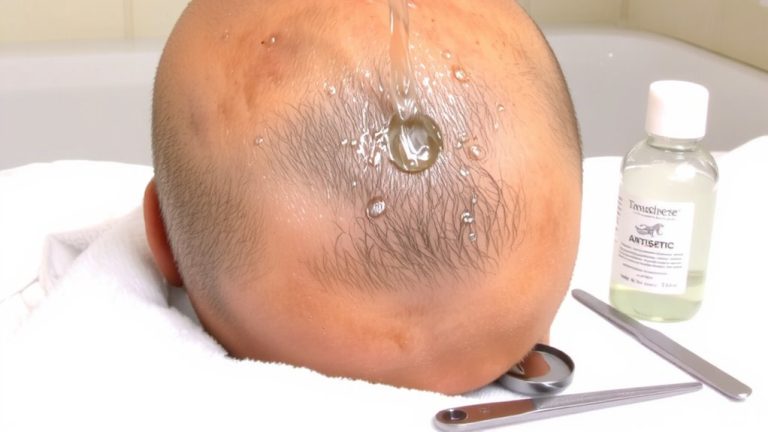
If you start noticing redness, itching, or tiny pustules shortly after dyeing your hair, stop the process immediately and rinse your scalp thoroughly with lukewarm water for at least 10 minutes to flush out lingering dye chemicals, including common irritants like PPD and ammonia. Gently wash your skin with an antibacterial soap or mild, fragrance-free product to reduce irritation and microbial load. Avoid harsh hair products or dyes until the condition improves. Don’t scratch-this can worsen inflammation and lead to infection. For relief from an itchy scalp, you can use 1% hydrocortisone cream as a temporary treatment. Proper care minimizes complications and supports healing. If symptoms don’t improve within 48 hours, or you develop pus, swelling, or fever, seek medical advice promptly. Early intervention prevents worsening and guides effective treatment.
Use OTC Shampoos for Mild Folliculitis
A calm scalp starts with the right shampoo, and for mild folliculitis, your best move is an over-the-counter option with proven antimicrobial power. If you’re dealing with scalp folliculitis after hair dye, otc shampoos with ketoconazole, ciclopirox, or tea tree oil can combat fungal and bacterial causes. For oily scalps or flaking, selenium sulfide and pyrithione zinc reduce inflammation and microbial load. Use an antimicrobial shampoo every other day-work it into the scalp gently, leave on for 3–5 minutes, then rinse. With mild folliculitis, consistent use for 2–4 weeks typically brings noticeable improvement. Avoid heavy conditioners and fragranced products during treatment. Switching to a gentle, medicated shampoo post-hair dye helps prevent further irritation and supports healing. These otc shampoos are effective, accessible, and easy to work into your routine.
See a Dermatologist If Symptoms Worsen
When redness spreads, pimples turn painful, or pus-filled bumps linger past a few days, it’s time to call your dermatologist-this isn’t a breakout that’ll clear on its own. If you’re noticing worsening symptoms after a hair dye reaction, don’t wait. See a dermatologist promptly to rule out serious causes like allergic contact dermatitis or tinea capitis. They might perform a skin scraping or biopsy to confirm the diagnosis. Left untreated, inflammation can lead to scarring or hair loss. Your provider may prescribe antibiotics for infection, prescription antifungals if yeast is involved, or topical steroids to reduce swelling and itching. Early intervention helps prevent long-term damage. According to Mayo Clinic, professional evaluation is key when folliculitis doesn’t improve with OTC care-so if your scalp’s not healing, get expert help fast.
How to Prevent Scalp Reactions When Dyeing Hair Again
You’ve seen a dermatologist and gotten the right treatment-now it’s time to get back to coloring your hair, but smarter. Protect your scalp by reducing chemical exposure and boosting scalp hygiene. Always do a patch test 48 hours before dyeing, even with plant-based hair dyes. Choose an ammonia-free hair dye to minimize irritation. Avoid scalp application by applying color only to the hair shafts. Wait between dye sessions-at least 6–8 weeks-to let your scalp recover fully. After coloring, rinse well and use a gentle medicated shampoo with ketoconazole or tea tree oil to soothe and protect.
| Prevention Step | Why It Works |
|---|---|
| Patch test | Catches allergies early |
| Ammonia-free hair dye | Less scalp irritation |
| Avoid scalp application | Reduces follicle damage |
| Wait between dye sessions | Lowers cumulative stress |
| Gentle medicated shampoo | Maintains scalp hygiene with ketoconazole, tea tree oil |
On a final note
If you get red bumps or itching after dyeing, it could be folliculitis from harsh ingredients like PPD or ammonia. Stop using the dye, wash with a gentle, anti-fungal shampoo (like Nizoral, twice weekly), and apply a 1% hydrocortisone cream. See a dermatologist if it spreads or doesn’t improve in 5–7 days. Patch-test new dyes 48 hours before applying, and switch to ammonia-free or henna-based formulas to prevent future flare-ups.