Classifying Various Manifestations of Beau’s Lines Clinically
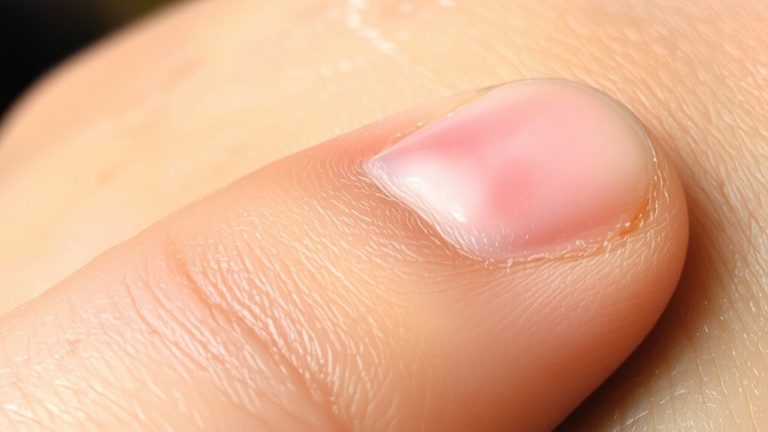
You’ll spot Beau’s lines as horizontal grooves you can feel across the nail, not just see, often on thumbs or big toes where growth is slow (3 mm/month for fingers, 1 mm/month for toes). Widespread involvement signals systemic stress-like infection or chemo-while single-nail dents suggest trauma. Deeper, wider grooves mean longer or more severe disruptions, with steep edges pointing to acute illness. Unlike Mees’ or Muehrcke’s lines, these grow out over time. Track their progress to estimate when your body faced a setback, and discover what clues come next.
We are supported by our audience. When you purchase through links on our site, we may earn an affiliate commission, at no extra cost for you. Learn more. Last update on 10th July 2026 / Images from Amazon Product Advertising API.
Notable Insights
- Beau’s lines are transverse grooves caused by temporary nail matrix growth arrest, palpable and not merely cosmetic.
- Systemic involvement of multiple nails suggests illness like infections or chemotherapy, while single-nail lines indicate local trauma.
- Groove depth correlates with severity of insult; deeper grooves reflect more significant disruption in keratin production.
- Width of the groove indicates duration of growth arrest, with wider lines representing longer pauses in nail formation.
- Symmetric, bilateral patterns across slow-growing nails (e.g., thumbnails) support systemic rather than mechanical etiology.
What Are Beau’s Lines?
Visualize running your finger over a thumbnail and feeling a distinct groove cutting across the nail-it’s not damage from picking or polish, but a sign your body hit pause on nail growth. Those indentations are Beau’s lines, horizontal grooves that form a transverse depression across the nail plate. They stem from a temporary halt in the proximal nail matrix, where keratin production slows due to severe stress, illness or trauma. Since nails grow about 3 mm monthly, these lines typically show up 4–8 weeks post-event. The depth reveals the insult’s severity; the width indicates how long nail growth stalled. Though they appear most often on thumbnails or great toenails-growing just 1 mm/month-they’re clues, not cosmetics. Spotting them prompts checking for an underlying cause, like systemic illness. Keep cuticles moisturized with shea-based balms, but know: smoothing won’t erase the story written beneath.
What Causes Beau’s Lines?
You’ve probably noticed those horizontal ridges running across the nail-now it’s time to uncover what’s behind them. Beau’s lines are transverse grooves caused by temporary growth arrest in the nail matrix, where cell division slows or stops. Common causes include systemic illness like measles, pneumonia, or sepsis, with changes appearing 2–3 weeks post-fever. Chemotherapy drugs such as paclitaxel disrupt keratin production, triggering noticeable ridges at treatment cycles. Physical trauma-from crushing injuries or surgery-can damage the matrix, often affecting just one nail. Nutrient deficiencies in biotin, zinc, or protein, seen in malabsorption or anorexia, are reversible causes. When stress, illness, or poor nutrition hits, the nail matrix pauses, leaving visible grooves. Recognizing these signs early helps guide care, whether adjusting diet, managing health, or protecting nails during treatment.
Beau’s Lines: Single Nail or All Nails?
What determines whether Beau’s lines show up on just one nail or across all of them? If you’ve got Beau’s lines on a single nail, especially a thumb or toe, it’s likely from localized trauma-like slamming it in a door-disrupting that nail’s matrix. But when transverse grooves appear on all nails, including fingernails and toenails, a systemic illness is usually to blame, such as severe infection, high fever, mumps, or even COVID-19. These conditions disrupt the growth pattern across all nail matrices simultaneously. Bilateral thumbnails and great toenails often show changes clearly due to their slower growth. If multiple, but not all, nails are involved, consider a regional underlying condition like Raynaud’s. Monitoring which nails are affected helps identify whether the trigger was localized trauma or a broader systemic illness.
What Groove Depth and Width Reveal
Beau’s lines don’t just signal something went wrong-they show how bad it was. The depth of transverse grooves reflects the severity of the underlying cause, with deeper grooves pointing to a major disruption in nail matrix function. You’ll see this after severe systemic illness, like prolonged sepsis or major surgery. The width tells you about the duration of arrested nail growth-wider grooves mean the stress lasted days or even weeks. Shallow Beau’s lines? Likely from brief stressors, like a short fever or temporary nutrient gap. If a deep groove spans the whole nail and takes over 7 weeks to grow out, it’s not just a Beau’s line-it may be onychomadesis, a full matrix shutdown. Steep groove edges suggest a sudden illness onset, while sloping ones hint at something slow-building. Watch these details-they reveal more than you think.
Estimating When the Trigger of Beau’s Lines Occurred
When the nail grows out enough to reveal a transverse groove, you can start tracing it back to pinpoint when the body’s stress occurred, treating the nail like a timeline of health events. By measuring the distance from the proximal nail fold to Beau’s lines, you estimate when the systemic illness struck. Fingernails grow about 3 mm per month, so a groove 9 mm from the fold suggests the underlying cause hit roughly 3 months ago. Toenails grow slower-around 1 mm monthly-so Beau’s lines there may reflect a stressor from 6 to 8 months prior. If you see multiple lines at varying distances, it signals repeated or prolonged illness. This timing helps link the duration of the disease to your medical history. Always consider nail growth rates in fingernails or toenails when evaluating the onset, since growth speed affects how soon Beau’s lines appear.
Beau’s vs. Mees’ and Muehrcke’s Lines
Think of your nails as a diary-each ridge, band, or discoloration tells a story, but not all marks mean the same thing. Beau’s lines are transverse grooves you can feel, caused by temporary disruption in the nail matrix due to systemic illness; they grow out with nail growth over weeks. Mees lines, often linked to arsenic poisoning or chemo, appear as white bands across the nail but don’t create indentations. Unlike Beau’s lines, they show up 1–2 months post-illness. Muehrcke’s lines, tied to hypoalbuminemia, are paired white horizontal ridges in the nail bed that blanch with pressure and won’t move with nail growth. Only Beau’s lines leave actual physical depressions. Spotting the difference helps pinpoint the cause-whether it’s metabolic stress, toxin exposure, or nutritional imbalance-so you can act fast and track recovery accurately as your nails regenerate.
When to Worry About Beau’s Lines
What’s really going on beneath those faint horizontal dents in your nails? If you see Beau’s lines across all 20 nails, it’s likely not just trauma-it signals an underlying systemic stressor. These grooves often follow a severe illness, like a high fever, myocardial infarction, or sepsis. Deep, wide Beau’s lines mean nail growth stopped for at least 7 weeks, pointing to a prolonged illness such as Kawasaki disease or uncontrolled diabetes. Recurring lines may hint at systemic diseases, chemotherapy, or zinc deficiency. If nail abnormalities come with discoloration, swelling, or pain, seek medical attention fast-these could be signs of endocarditis or psoriasis. And if Beau’s lines don’t grow out in 6–12 months, or you’re feeling unwell, see your healthcare provider. That subtle ridge might be your body flagging a serious condition needing diagnosis.
On a final note
You’ll spot Beau’s lines as deep, horizontal grooves across your nails, not surface stains like Mees’ lines or Muehrcke’s bands. They often show up on all fingernails, linked to stress, illness, or chemo, with deeper grooves pointing to more severe triggers. Since nails grow about 3.5 mm monthly, measure from the groove to the cuticle-roughly 2–4 months back-to time the cause. Keep nails moisturized with squalane or ceramide creams, file gently with 180-grit buffers, and protect with breathable polishes like those from OPI or CND. Most resolve on their own, but mention new or repeated lines to your doctor.