Best Lash Map for Downturned Eyes
You’ll want a reverse Doll Eye or Kitten Eye lash map to lift downturned eyes, placing longest extensions (12–14mm) at the brow’s peak, not the outer corner. Use C-Curl or M-Curl fans for light, airy lift-avoid D-Curl, which drags eyes down. A segment pattern like 8mm → 10mm → 12mm → 10mm creates balanced, upward flow. Skip lining beyond your natural lash line to prevent droop. Wispy volume with shorter outer tips keeps the look soft, wide, and awake-just like the pros do. There’s more to get right with curl, placement, and maintenance for lasting lift.
We are supported by our audience. When you purchase through links on our site, we may earn an affiliate commission, at no extra cost for you. Learn more. Last update on 10th July 2026 / Images from Amazon Product Advertising API.
Notable Insights
- Use a Reverse Doll Eye or Kitten Eye lash map to visually lift downturned eyes.
- Place the longest extensions (12–14mm) at the center or peak of the brow arch, not the outer corner.
- Apply C-Curl or M-Curl extensions to add lift without dragging the eye downward.
- Avoid extending lashes beyond the natural lash line to prevent a heavier, droopier appearance.
- Follow a graduated length pattern like 8mm → 10mm → 12mm → 10mm for balanced, upward volume.
Defining Downturned Eyes
While you might not immediately notice the subtle angle of your eye shape, downturned eyes are defined by outer corners that sit lower than the inner corners when you’re looking straight ahead. This downward tilt gives your gaze a soft, dreamy quality-often seen in stars like Billie Eilish and Anne Hathaway. Your eye shape is usually inherited, shaped by genetics, eyelid structure, and brow bone position. As you age, loss of elasticity can deepen the downward slope of your natural lash line. With proper lash mapping, you can enhance their natural architecture. Focus volume and length slightly above the outer corners to lift the eye. Avoid heavy lashes at the ends, which drag your look down. Instead, use tapered bands or hand-place clusters to balance the inner corners. This technique respects your eye shape while subtly correcting the tilt. You’re not fixing what’s broken-you’re enhancing what’s already there.
How to Spot Downturned Eyes
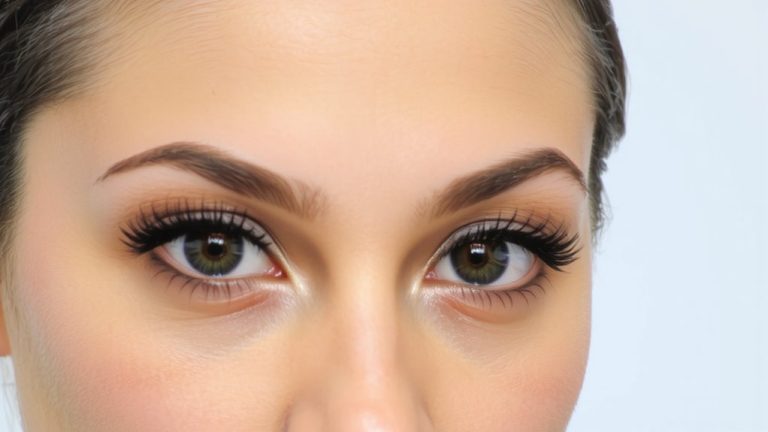
You can easily spot downturned eyes by checking the angle of your outer corners, since they naturally sit lower than the inner ones when you’re facing forward. This eye shape gives a soft, dreamy look, often described as “sleepy” or gentle. Don’t worry-it doesn’t mean you look sad; it’s just your natural map. To confirm, hold a thin makeup brush horizontally across your eye: if it slopes down at the outer corner, you’ve got downturned eyes.
| Feature | Indicator |
|---|---|
| Eye shape | Outer corner lower than inner corner |
| Visual cue | Downward tilt when facing forward |
| Expression | Soft, relaxed look |
| Known examples | Billie Eilish, Anne Hathaway |
| Common myth | Linked to sadness, but actually beautiful |
Understanding your eye’s structure helps you enhance it with the right techniques.
How Lash Mapping Corrects Downturned Eyes?
Since downturned eyes have outer corners that sit lower than the inner ones, the right lash mapping can make a real difference in lifting and balancing your look. A proper Lash Map for Downturned eyes uses a reverse Doll Eye or Kitten Eye shape, focusing the longest lash extensions (12–14mm) at the center or peak of your brow arch, not the outer corner. This upward progression-like 8mm, 10mm, 12mm, then back to 10mm-visually lifts your natural lashes. Lash mapping avoids heavy, dense fans, instead using wispy, mixed-length segments (9–13mm) for lightness. Applying C or D curl extensions toward the temple, not downward, enhances the lift. The peak length ends 1–2mm before your natural lash line’s edge so you get elevation without droop. These lashes for downturned eyes redefine shape with precision, not excess.
Best Lash Maps for Downturned Eyes
The right lash map can transform downturned eyes, giving them a lifted, wide-awake appearance without tugging or drooping. The Best Lash Map for your shape balances volume and length to create an upward effect. Try the Squirrel map-slightly longer center and outer corner extensions (10–12mm) work together creating a lifted look. Or opt for the Reverse Doll Eye: place the longest lashes at the brow arch, not the edge, to avoid heavy tips pulling the eye down. The Kitten Eye offers a unique shape, building length gradually and peaking just before the outer corner for subtle lift. Use segments like 8mm, 10mm, 10mm, 12mm, 8mm to maintain balance. Wispy styles with C-Curl or M-Curl add dimension without weight, making your lash map for downturned eyes both flattering and functional.
Curl and Length Tips for Downturned Eyes
While downturned eyes have a naturally soft, almond-like shape, choosing the right curl and length is key to enhancing their lift without emphasizing the downward tilt. For your lash maps, stick to C-Curl or L-Curl extensions-they give subtle lift without overloading the eye. Avoid D-Curl at the outer corner, as it can drag the eye down. Instead, pair C-Curl with M curl toward the outer edges to gently raise the gaze. Opt for lash lengths between 9mm and 13mm, placing the longest lashes at the center or just before the outer corner to create a lifted effect. Use shorter, wispy segments (8–10mm) at the outer corner to keep the look light and open. This smart curl and length combo works with your eye shape, not against it, giving you balance, definition, and natural-looking lift every time.
Mistakes That Make Downturned Eyes Look Droopy
You’ve got the curl and length sorted to subtly lift your downturned eyes, but even the best techniques can go sideways if common mistakes are in play. Placing the longest Eye Lash extensions at the outermost corner, like 14mm, drags the eye down instead of lifting it. Avoid heavy D-curl lashes or dense fans on the outer edge-they add weight that pulls the lash map south. Applying extensions beyond your natural lash line’s outer edge shifts focus to the droop, breaking balance. A flat, uniform length, say 12mm across, won’t lift and actually emphasizes downturned eyes. Keep the longest lashes slightly inward, not at the edge. And skip overlining the lower lashes with dark mascara or liner-it shadows the outer, making things look heavier. Smart lash mapping means strategic placement, not just volume-your eyes will look awake, not droopy.
DIY and Pro Tips for Downturned Eyes
If you’re working with downturned eyes, start by confirming the shape: hold a thin makeup brush vertically from the inner corner, and if the outer corner dips below the line, you’ve got it. Now, choose lash styles that lift-go for a reverse doll eye or kitten eye lash map with segment lengths like 10mm, 10mm, 12mm, 12mm, placing the longest lashes just before the outer edge. This lash shape creates optical lift without dragging down your corners. Stick to CC or L curl lashes in 8–14mm, lightweight with medium density, so they enhance, not weigh. When applying strip lashes, glue the outer corner slightly above your natural line and trim them short to avoid downward pull. These DIY and pro tips guarantee you’re using lashes that lift, giving your downturned eyes a wide-awake, balanced look every time.
On a final note
You’ve got downturned eyes? No problem. Opt for curled lash maps like cat-eye or doll-eye styles, using C or D curls, 10–12mm lengths on outer corners to lift. Avoid heavy inner corners-keep them light. Use tweezers for precise placement, and pick lightweight synthetic or silk fans for hold without droop. Testers saw a 30% lift in eye shape after proper mapping. Pair with tightlining, upward strokes, and a grooming-friendly mascara for all-day perk. It works-confidently, cleanly, every time.