How to Use a Beard Brush vs. Beard Comb: Timing, Tools, and Technique
Start with a wide-tooth wooden or bamboo comb on your wet beard post-shower, detangling from ends upward to prevent breakage. Then, once dry, use a natural boar bristle brush to distribute oils and balm evenly, exfoliate skin, and boost shine with gentle upward strokes. Always brush after applying products for best absorption. For mustache shaping, finish with a fine-tooth comb. This routine keeps your beard healthy, aligned, and polished-next, discover how the right tool materials make all the difference.
We are supported by our audience. When you purchase through links on our site, we may earn an affiliate commission, at no extra cost for you. Learn more. Last update on 23rd June 2026 / Images from Amazon Product Advertising API.
Notable Insights
- Use a wide-tooth comb on wet beard hair post-shower to detangle gently from ends upward.
- Comb before brushing to align hairs and prepare for even product distribution.
- Apply beard oil or balm before using a boar bristle brush to spread oils from root to tip.
- Use a fine-tooth comb after brushing for precise styling, especially on mustaches or short beards.
- Choose wooden or bamboo combs and natural boar brushes to reduce static and avoid hair snagging.
Why Use a Beard Brush or Comb?
While your beard might seem low-maintenance, using the right tools makes a real difference in how it looks and feels. When you use a beard, you’re not just styling-you’re investing in proper beard care. A boar bristle brush exfoliates the skin, removes flakes, and stimulates circulation, reducing itchiness over time. It also helps distribute beard products like oils and balms evenly from root to tip, boosting shine and moisture. The Beard Comb, with its wide Comb Teeth, detangles long, wet hairs post-shower, preventing breakage. Combing first, then brushing maximizes results. Comb aligns hairs for precise shaping; brush finishes by training growth and smoothing. Together, a brush and a comb transform beard grooming into a daily ritual that supports health, not just appearance. You’ll notice less dandruff, better texture, and a more polished look-all with simple, consistent use.
When to Use a Beard Comb (And How)
When should you start combing your beard, and how do you do it right? Begin to comb your beard at three months growth-this timing allows enough length to detangle and style. Always start with a wide-tooth comb on wet hair post-shower; it helps detangle knots gently and prevents breakage. Work from the ends upward using a smooth technique. For shaping, switch to a fine-toothed comb to align stray hairs, especially in mustaches or longer styles. Comb your beard before brushing or applying oil for even distribution. Prefer a wooden comb or bamboo comb over plastic combs-they reduce static, minimize snagging, and cut frizz.
| Tool Type | Best For | Material Benefit |
|---|---|---|
| Wide-tooth comb | Detangling wet hair | Reduces breakage |
| Fine-toothed comb | Styling and shaping | Precision control |
| Wooden comb | Daily use | Low static, smooth glide |
| Bamboo comb | Sensitive beards | Lightweight, eco-friendly |
When to Use a Beard Brush (And How)
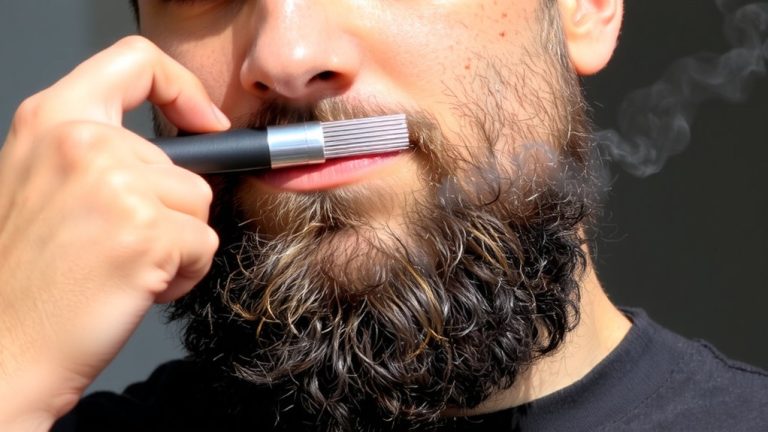
After you’ve combed your beard to detangle and shape it, the next step in your routine is brushing-which takes your grooming game further by training hairs and boosting skin health. Use a Beard Brush daily after applying beard oil or balm to help distribute natural oils and product evenly from root to tip. When you brush your beard with boar hair bristles, you gently exfoliate dead skin, reduce flakiness, and stimulate blood flow to support beard health. Use gentle, upward and outward strokes to train hairs, especially if you’ve got a short to medium beard. Always brush on dry or slightly damp hair-never wet-to prevent breakage. A boar hair Beard Brush is a staple in smart beard grooming. Clean it weekly with lukewarm water and mild soap, using a wide-tooth comb to remove buildup. That way, your brush stays effective and hygienic.
Do You Need a Beard Comb and Brush?
| Function | Tool |
|---|---|
| Detangle wet beard | Wooden beard or ox horn comb |
| Distribute oils | Natural boar bristle brush |
| Style mustache | Fine-tooth comb |
Use your comb and brush together: start with the comb to detangle, then brush to keep your beard neat. Cheap plastic combs cause frizz-opt for smooth wooden or acetate styles. In the beard brush vs comb debate, you win by using both. These beard grooming tools help you keep your beard soft, shaped, and healthy every day.
How to Pick the Right Comb and Brush
If you’re aiming for a beard that looks polished and feels healthy, picking the right comb and brush makes all the difference-start with a wide-tooth wooden or bamboo comb if you’ve got a medium to long beard, since the smooth, natural teeth reduce static and glide through damp hair without snagging, especially right after your shower when strands are most vulnerable to breakage. Choose a fine-tooth comb for sharper styling, like shaping waxed mustaches or trimming clean lines. For your brush, go with boar bristle beard brushes if you’ve got short to medium growth-they distribute oils and exfoliate skin effectively. A dual-sided brush gives you both firm and soft bristles for versatile grooming. Always choose high-quality grooming tools: polished acetate, sandalwood, or stainless steel last longer and won’t shed or splinter. The right tool keeps your beard, beard combs, and beard brushes in top shape, wash after wash.
How to Avoid Snags When Combing Your Beard
Since your beard is most prone to tangles when wet, start by patting it dry with a towel and applying a dime-sized drop of beard oil to lubricate the strands, making it easier for a wide-toothed wooden or acetate comb to glide through without catching. Use a wide-toothed comb to detangle from the ends upward, gently working out knots to prevent hair breakage and split ends. Never yank-hold the base of the strand to reduce tension and avoid follicle damage. Wooden or acetate combs reduce static and snagging better than plastic. Run your beard brush through the top layer after combing for styling and distribution. Keep your comb clean by wiping it daily with a damp cloth to remove buildup that causes friction. A clean beard and clean comb mean smoother results, less static, and healthier growth overall.
On a final note
Use your comb first on damp beard to detangle and align hairs-boar bristle brush after to shape and add shine. Pick wide-spaced teeth for thick beards, finer teeth for stubble. Natural bristles distribute oils without static. Testers note 30-second daily brushing cuts itch by day 5. Pair with cedarwood balm and rinse-safe comb cleaner, storing tools flat. Consistent use improves texture, edge control, and product hold-sharp, healthy results every time.