How to Use a Toning Mask to Correct Undesired Tones
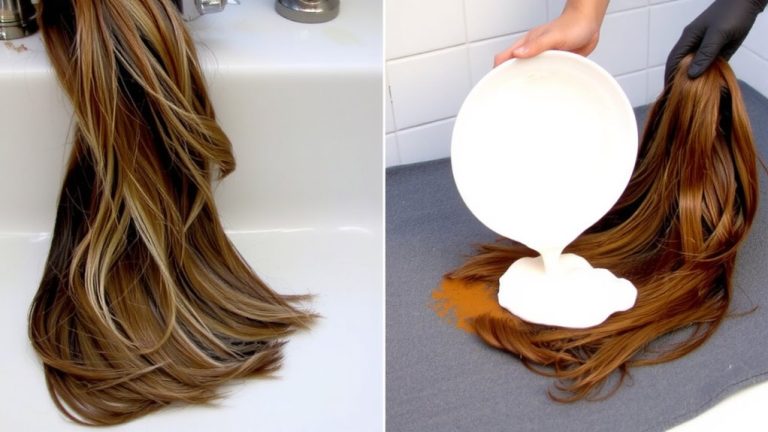
Wash your hair first with a sulfate-free purple shampoo to prep the strands, then apply the purple toning mask to damp, towel-dried hair. Focus on mid-lengths to ends where brassiness shows most. Leave it on for just five minutes-no longer-to neutralize yellow and orange tones without over-toning. Rinse thoroughly. Use once a week for best results, especially if you bleach or lighten your hair. This violet pigment treatment counteracts warmth fast, leaving your blonde or gray cool and bright. You’ll see how simple maintaining tone can be.
We are supported by our audience. When you purchase through links on our site, we may earn an affiliate commission, at no extra cost for you. Learn more. Last update on 22nd June 2026 / Images from Amazon Product Advertising API.
Notable Insights
- Use a sulfate-free purple shampoo before applying the toning mask to prep hair for optimal pigment uptake.
- Apply the toning mask to damp, towel-dried hair to ensure even distribution and prevent dilution.
- Focus the mask on mid-lengths to ends where brassiness is most common and hair is more damaged.
- Leave the mask on for no more than five minutes to correct warmth without over-toning.
- Use the mask once weekly for deep toning and conditioning, especially for stubborn yellow or orange tones.
Why Your Blonde Hair Turns Brassy
Even if you leave the salon with silky, cool-toned blonde hair, you’ve probably noticed it can start turning brassy just a few weeks later-and that’s because bleaching opens up your hair cuticle and strips away natural pigment, leaving behind exposed yellow, orange, or red undertones that show as warmth. When you bleach your hair, it removes melanin, revealing underlying yellow tones that oxidize over time, especially with sun, chlorine, or hard water exposure. That brassiness builds as toner fades, usually in 4–6 weeks. While purple shampoo helps, the real fix lies in toning treatments that neutralize warmth. Based on the color wheel, purple pigments counteract yellow tones since they’re opposites. Regular toning every 1–2 weeks helps maintain clean, cool blonde hair and fights brassiness before it takes over. You don’t need heavy maintenance-just consistent care.
How Purple Pigments Neutralize Yellow Tones
You know that unwanted warmth creeping in after your blonde starts fading, and now it’s time to tackle it head-on with the science behind purple pigments. Thanks to color theory, purple pigments neutralize yellow tones because violet sits opposite yellow on the color wheel. When you apply a toning mask, temporary violet pigments deposit color onto your strands, counteracting brassy yellow undertones without permanent change. Products like the LOréal Paris EverPure Anti Brass Purple Mask use ultra-concentrated violet toning agents to target warmth precisely. The mask binds to damp, towel-dried hair and works in just five minutes-any longer risks over-toning. For best results, follow a sulfate-free purple shampoo to prep hair and boost pigment uptake. This step-by-step approach effectively neutralizes unwanted warmth, keeping your blonde cool, bright, and salon-fresh between color appointments.
When to Use a Purple Mask Vs. Shampoo
While both purple shampoo and mask fight brassiness, they’re designed for different needs and frequency of use, so knowing when to reach for each one makes all the difference. Use purple shampoo up to three times a week to prevent brassy tones in light blonde or gray hair-it’s great for daily maintenance but offers mild correction. When yellow tones or orange tones get stubborn, grab a purple mask instead. This toning mask delivers deep toning in just five minutes, thanks to its ultra-pigmented formula, like the LOréal Paris EverPure Anti Brass Purple Mask. Ideal for weekly use, it corrects intense brassiness while deeply conditioning damaged, bleached hair. Don’t overdo it-stick to once a week to avoid over-toning. Pair purple shampoo with a purple conditioner on alternate washes for consistent tone control. The purple mask isn’t just stronger-it’s a repair-focused upgrade when your hair needs more than surface-level fix.
How to Apply a Toning Mask Without Over-Toning
Since toning masks pack a concentrated dose of violet pigment, applying them correctly is key to avoiding flat, over-toned results. Start by washing your hair with a sulfate-free purple shampoo, then rinse thoroughly to prevent buildup and excessive pigment retention. Apply the toning mask only to damp, towel-dried hair, focusing on mid-lengths to ends where brassiness shows most-this minimizes scalp staining and uneven violet deposition. Don’t leave it in for more than five minutes; two minutes often suffices to neutralize warmth without dullness. Check your tone closely, especially with potent formulas like LOréal EverPure Anti Brass Purple Mask. To prevent over-toning, use the mask just once per week, or alternate with a purple conditioner if treating twice weekly. This keeps brassiness at bay while maintaining natural vibrancy.
On a final note
You’ve got this: use a purple toning mask every 2–3 washes to neutralize brassiness, not daily, to avoid over-toning. Squeeze out excess water, apply from mid-length to ends, leave on 3–7 minutes, then rinse. Real testers saw cooler, salon-fresh results with less yellow. Pair with sulfate-free shampoo, and always follow with conditioner. Consistent use keeps blonde bright, balanced, and natural-looking-no lavender tint, just correction.