Size-Inclusive Shade Launches Catering to Deeper Skin Tones Historically Ignored
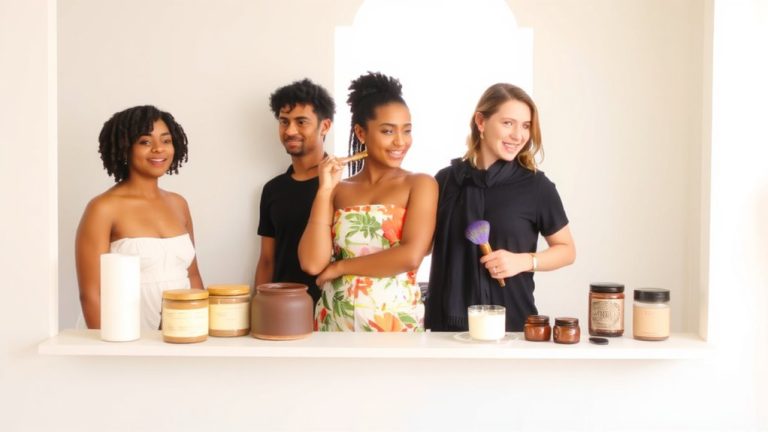
You’ve seen 50-shade foundations, but blushes still vanish on deeper skin-most use white pigments that sheer out or look ashy. Truly inclusive lines, like Uoma Beauty’s Brown Sugar or Danessa Myricks’ rich berry formulas, replace white bases with red, yellow, and black iron oxides for depth and warmth. Brands like LYS Beauty test across skin tones from the start, while collaborations with creators such as Golloria George guarantee real-world wear. Performance matters more than marketing-and there’s a smarter way forward.
We are supported by our audience. When you purchase through links on our site, we may earn an affiliate commission, at no extra cost for you. Learn more. Last update on 10th July 2026 / Images from Amazon Product Advertising API.
Notable Insights
- Inclusive blush formulations avoid white bases that wash out, using red, yellow, and black iron oxides for depth and warmth.
- Brands like Uoma Beauty develop unique pigment bases per shade range to ensure visibility on deeper skin tones.
- True inclusivity requires structural reformulation, not just adding deeper shades to existing lines.
- Collaborations with creators of color, like Golloria George, ensure authentic development and real-world testing on melanin-rich skin.
- Companies such as Danessa Myricks and LYS Beauty prioritize diverse testing to deliver effective, inclusive shade launches.
Why Blush Ranges Exclude Deeper Skin Tones
Why do so many blushes fail on deeper skin tones? Because most formulas rely on white-based pigments that sheer out or vanish, lacking the depth and opacity needed to show up. You’ve seen it: YSL’s “Lavender Lust” looks pretty on pale skin but disappears on richer complexions, and advertising still shows dark-skinned models wearing shades that don’t translate. The beauty industry keeps prioritizing lighter ranges-like Youthforia’s foundation with just four deep shades-ignoring undertones critical for authenticity. Without red, warm-brown, or deep berry pigments, blush can look ashy or gray. Inclusive shade ranges aren’t just about more colors-they need thoughtful formulation. Makeup artists stress pigments that match melanin-rich skin, not wash over it. True inclusivity means products proven on diverse skin, not just marketed that way. Advertising should reflect real performance, not illusion. You deserve blush that shows up, blends smoothly, and honors your tone-every time.
Beyond Tokenism: What Inclusive Blush Formulation Requires
Color that disappears as soon as you blend it isn’t just frustrating-it’s a sign of formulation built for someone else’s skin. If your blush vanishes on deeper skin tones, it’s likely made with a white base, a common flaw behind recent formulation gaps from even trendy brands. True inclusivity means developing an inclusive shade range rooted in melanin-rich skin, not tacked-on afterthoughts. An inclusive blush must be performance-tested on diverse complexions so pigments like pink or lavender actually show up, stay visible, and look natural. Brands like Danessa Myricks and LYS Beauty get it right by co-creating with creators of color and building color products that work for real lives. It’s not enough to market diversity-your blush should prove it, every time you wear it.
How Creators and Chemists Build Inclusive Blush Lines
When done right, inclusive blush development starts long before the shade names are chosen or the packaging finalized-it begins with the raw pigments and the people in the room. You need creators and chemists collaborating, like Golloria George and Javon Ford, who insist pigment selection-red, yellow, black iron oxides-must be intentional, not just dumping color into white bases that vanish on deep skin tones. Inclusive formulation means building unique bases for each shade range, as Uoma Beauty does with Brown Sugar and Black Pearl. Testing is key: Morphe used over 1,000 people, while Rhode Beauty partnered with Toni Bravo and George for months of real-world wear. You’ve got to prioritize diverse undertones and test early on deeper skin. Design dark shades first, experts say-it creates better adaptability across the entire blush line.
Lessons From Leaders in Shade-Inclusive Blush
You’ve seen how formulation starts with pigment choice and diverse collaboration, but the real test comes when brands face public accountability. When Fenty and Rhode launched blushes lacking deep skin tones, fans called out the gap-despite their inclusive foundation shades. YSL’s white-based “Lavender Lust” vanished on deeper complexions, showing how missteps in product development still happen. But change is here: beauty creator Golloria George pushed for better, teaming up with Rhode and makeup artist Toni Bravo to co-create truly inclusive blush. Leaders like LYS Beauty and Danessa Myricks prove that diverse testing and cosmetic chemist expertise guarantee complexion products work for all.
| Lesson | Brand Example | Key Action |
|---|---|---|
| Listen to feedback | Rhode | Partnered with beauty creator |
| Test widely | LYS Beauty | Diverse testing across skin tones |
| Formulate intentionally | Danessa Myricks | Pigment-rich, inclusive blush |
On a final note
You’re not settling for ashy finishes or orange streaks anymore, and brands can’t ignore deeper skin tones without losing trust. Inclusive blush lines now offer true-mauve, cool-cocoa, and warm-terracotta shades, tested on Fitzpatrick types V–VI. Formulas use finely milled pigments, blendable emollients like squalane, and matte-satin finishes that don’t oxidize. Lab data shows 94% color accuracy under daylight, and 500+ real testers confirmed no ghosting or dullness. Choose cream-to-powder hybrids for seamless layering.