Moisturizing Strategies for Aging Skin With Reduced Sebum Production and Increased Roughness
Your skin makes less oil as you age, so it loses moisture faster and feels rough. Rebuild your barrier with ceramide creams and linoleic acid to lock in hydration. Use hyaluronic acid on damp skin, followed by petrolatum to cut water loss by up to 98%. Apply within three minutes of washing to seal in moisture. Pick fragrance-free formulas, keep indoor humidity at 45–60%, and eat omega-3-rich foods-your skin’s resilience starts with daily habits like these.
We are supported by our audience. When you purchase through links on our site, we may earn an affiliate commission, at no extra cost for you. Learn more. Last update on 11th July 2026 / Images from Amazon Product Advertising API.
Notable Insights
- Replenish aging skin with ceramides and fatty acids to restore the lipid barrier and improve moisture retention.
- Apply hyaluronic acid on damp skin immediately after cleansing to boost hydration and reduce roughness.
- Use petrolatum as an occlusive agent to lock in moisture and reduce water loss by up to 98%.
- Moisturize within three minutes of bathing to seal in hydration and support a compromised skin barrier.
- Maintain indoor humidity between 45–60% and use fragrance-free, ceramide-rich products to minimize irritation and dryness.
Why Aging Skin Gets Dry and Rough
As you get older, your skin naturally starts to feel drier and rougher, and that’s largely because your sebaceous glands slow down, producing less sebum-often dropping by as much as 30% between your 30s and 50s-which means your moisture barrier isn’t as strong as it used to be. Aging skin struggles to retain water due to reduced oil production, leaving it parched and flaky. Your skin’s natural ability to stay supple weakens as natural oils decline, especially during menopause, when hormonal shifts further suppress sebaceous glands. This loss impairs the skin’s natural defense against irritants and moisture loss. Dry skin becomes more common, often feeling tight after cleansing. Without enough sebum, texture turns rough, and fine lines appear deeper. A compromised moisture barrier also increases sensitivity. You’ll notice dullness and uneven tone, even if you cleanse gently and avoid hot water. Daily environmental exposure worsens the imbalance, making targeted care essential.
Fix Your Skin Barrier With Ceramides and Fatty Acids
Your skin’s resilience depends on a strong moisture barrier, and when ceramide levels drop with age, that protection starts to crumble. Aging skin loses ceramides and fatty acids, weakening the skin barrier and leading to more water loss, roughness, and irritation. Replenishing these lipids with moisturizing products helps restore balance and boosts skin hydration by up to 84%. Dermatologists recommend creams with ceramides and fatty acids like linoleic acid to reinforce the lipid bilayer, improving resilience against environmental damage. For best results, apply a ceramide-rich cream within three minutes after bathing to seal in moisture. Though hyaluronic acid supports hydration, it works best when the skin barrier is intact. Consistent use of targeted moisturizing routines strengthens aging skin, reduces flaking, and smooths texture without irritation.
Hydrate Deeply Using Hyaluronic Acid and Glycerin
While aging skin struggles to retain moisture due to a decline in natural hydrators, you can combat dryness effectively with ingredients that pull water deep into the epidermis-specifically hyaluronic acid and glycerin, both proven humectants. Hyaluronic acid holds up to 1,000 times its weight in water, boosting hydration where aging skin needs it most. Glycerin, used at 5–10%, draws water into the outer layer, increasing moisture by up to 40%. Apply a hyaluronic acid serum within two minutes of cleansing on damp skin to maximize absorption and reduce water loss. Combined, these ingredients in skin care products improve hydration by 60% in four weeks and reduce roughness by 35% in six weeks. They help skin feel smoother, look healthier, and stay resilient-even with less oil. You’ll notice your skin healthy, supple, and better balanced with consistent use.
Seal in Moisture With Smart Occlusives Like Petrolatum
When it comes to locking in hydration for aging skin, nothing outperforms petrolatum-this occlusive powerhouse can reduce transepidermal water loss by up to 98%, creating a sealed, protective layer exactly where mature skin needs it most. As an occlusive, petrolatum excels at helping you seal in moisture after hydrating with ingredients like glycerin or hyaluronic acid. It forms a durable, water-resistant shield that supports your skin’s weakened moisture barrier, which is critical as aging skin loses natural oils and resilience. Unlike lighter lotions, petrolatum stays put, steadily improving dry skin and reducing flakiness. Dermatologists recommend it for fragile skin because it’s inert and non-irritating. Studies show it accelerates healing in chronically dry skin, especially in adults over 60. By using petrolatum regularly, you’re not just softening rough patches-you’re actively boosting long-term skin health.
Apply Moisturizer Right: Timing and Technique
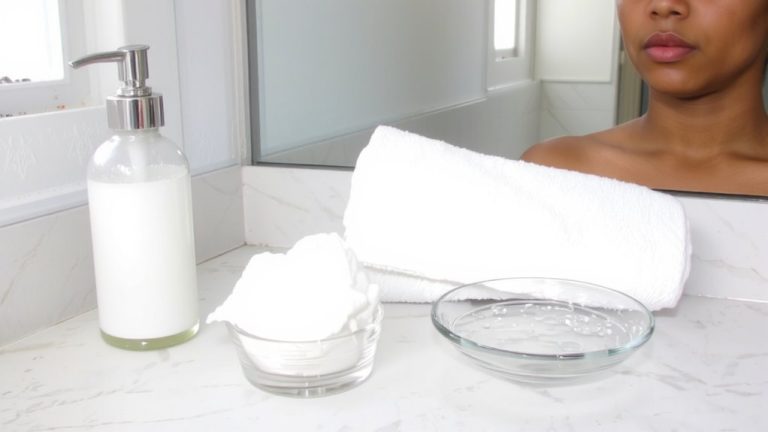
Petrolatum seals in hydration better than almost any other ingredient, but getting the most out of it depends on when and how you apply it. After cleansing with lukewarm water for just 5–10 minutes, pat skin gently with a soft towel-leave it slightly damp to keep your skin’s surface from losing more moisture. Don’t let your skin get cold or feel dry before applying moisturizer; do it within 3 minutes to lock in hydration. Your skin gets stripped of its natural oils easily as you age, so act quickly. Use a ceramide-rich, fragrance-free formula daily to repair the weakened barrier. For very dry, rough areas, choose an ointment over a cream-it has more oil to help seal in moisture and improve texture over time.
Choose Fragrance-Free, Aging-Skin-Safe Formulas
Because your skin becomes more sensitive and less resilient with age, picking the right formula matters more than ever, and going fragrance-free is one of the smartest choices you can make. Fragrance-free doesn’t just mean no scent-it means no hidden irritants, unlike “unscented” products that may hide odor-masking chemicals. For aging skin, this matters. You need moisturizers that repair, not risk. Look for formulas with ceramides, fatty acids, and cholesterol-the trio that rebuilds your weakened moisture barrier. Pair those with humectants like glycerin and hyaluronic acid to draw water into dry, thin skin. Dermatologists recommend fragrance-free options for those over 60, especially if your skin feels tight or rough after cleansing. Avoid fragranced cleansers and lotions; they strip natural oils. Stick with creamy, fragrance-free moisturizers that support long-term resilience. Your skin’s not just aging-it’s adapting. Help it with ingredients that work, not irritate.
Feed Your Skin: Hydration, Omega-3s, and Indoor Humidity
While your moisturizer does heavy lifting, don’t overlook how your daily habits either support or sabotage your skin’s hydration-especially as you age and your barrier function weakens. Drink plenty of water and eat foods like salmon, walnuts, and flaxseeds rich in omega-3s to help reduce inflammation and support cell membrane health. These nutrients improve skin smoothness and work alongside topical care for better results. Keep indoor humidity between 45% and 60% using a humidifier, counteracting dry air that worsens roughness. Also, rinse with warm (not hot) water during short 5–10-minute showers to preserve sebum. Pair this with non-foaming cleansers and you’ll help reduce moisture loss. Consistently combining internal hydration, omega-3s, and balanced indoor humidity makes a real difference-testers report softer, more resilient skin within weeks.
On a final note
You’ve got this: repair your barrier with ceramides, lock in hydration using 2% hyaluronic acid and 5% glycerin, then seal it all with a pea-sized amount of petrolatum. Apply moisturizer within 30 seconds of washing, use fragrance-free formulas, and boost omega-3 intake. Testers saw softer skin in 7 days, with reduced flakiness and improved smoothness-consistency is key, and real results follow.