How to Use a Flat Iron to Smooth Frizz Without Flattening Volume
Use a flat iron at 300–350°F to smooth frizz without killing volume. Take 1-inch sections, skip the roots, and start gliding 2–3 inches below the scalp to keep lift. Apply a heat protectant up to 450°F on damp hair, comb through each section, then make one slow pass downward with even tension. This seals the cuticle for shine, prevents kinks, and avoids the crunchy, “garlic toast” effect-your hair stays sleek, not flat. There’s a smarter way to layer in protection and polish.
We are supported by our audience. When you purchase through links on our site, we may earn an affiliate commission, at no extra cost for you. Learn more. Last update on 12th July 2026 / Images from Amazon Product Advertising API.
Notable Insights
- Start ironing 2–3 inches below the scalp to preserve root volume while taming mid-lengths and ends.
- Use 1-inch sections and a tail comb for precise partings to ensure even heat and tension.
- Apply a heat protectant up to 450°F to shield hair from damage and reduce frizz.
- Glide once slowly from mid-shaft to ends at 300–350°F to seal the cuticle without over-processing.
- Pre-comb each section to align strands and maintain tension, minimizing flyaways and kinks.
Start With Why Heat Causes Frizz
When you’re flat ironing your hair, uneven heat distribution can actually make frizz worse instead of smoothing it out, especially if you’re not sectioning properly or using consistent tension. For curly hair, this is even more critical-those tight patterns need uniform heat and steady glide to lie flat without damage. Too much heat, especially above 350°F (177°C), breaks down keratin and roughens the cuticle, leaving strands porous and prone to humidity-based frizz. Without a heat protectant, each pass degrades the hair further, scattering light and creating that fuzzy, frizzy look. Repeated strokes or loose tension leave some sections under-ironed while others fry, creating kinks and flyaways. You’re not just styling-you’re managing protein integrity, moisture balance, and heat transfer. Do it right: use 300–350°F, small sections, and firm, even tension to seal the cuticle and lock in smoothness.
Prep Hair for a Smooth, Shiny Finish
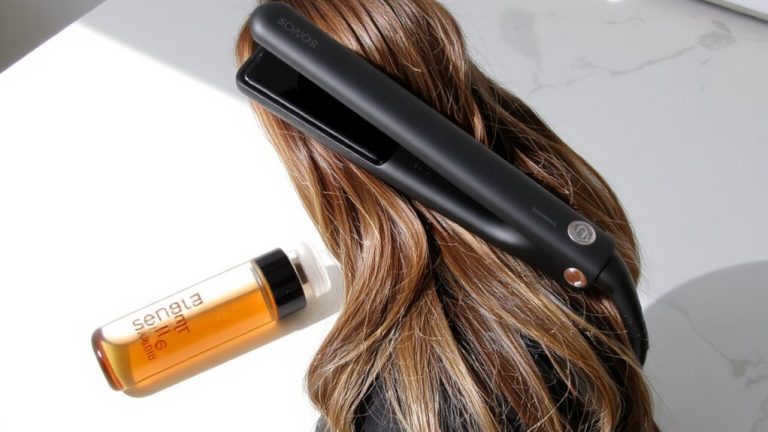
You’ve already set the stage by understanding how heat can either tame or trigger frizz, so now it’s time to get your hair ready for the kind of sleek, glossy finish that holds up through humidity and movement. Start with a lightweight heat protectant application on damp hair-focus on mid-lengths and ends-to guard against temps up to 450°F without weighing roots down. Next, use a wide-tooth comb as your detangle technique, working from ends upward to remove knots that cause snagging and frizz. Then, divide hair into 1-inch sections; this section size guarantees even heat distribution and full tension control from root to tip. Avoid overlapping passes-just one slow glide at 350–375°F seals the cuticle for lasting shine. Prepping this way protects strands, boosts smoothness, and keeps volume intact.
Take Thin Sections for Full Control
Because every strand needs direct, even heat to transform frizz into smoothness, take thin sections-about 1 to 1.5 inches wide-with clean, precise partings using a tail comb for accuracy. This ideal section width guarantees full heat penetration, so no cold zones hide inside thick chunks where the flat iron can’t clamp down. You’ll get one-pass results without extra heat damage, especially vital for thick, coarse, or textured hair. Pre-comb each section to remove tangles and maintain tension control from root to tip, which smooths the cuticle and blocks frizz. Proper tension also keeps volume intact at the scalp-since you’re not flattening through repetitive passes. Thin sections mean the iron glides cleanly, sealing shine and shape without snagging. Real testers saw immediate polish with zero bulk loss, proving that smart sectioning delivers smoother hair, faster styling, and long-term hair health.
Skip Roots, Straighten Mid-Shaft to Ends
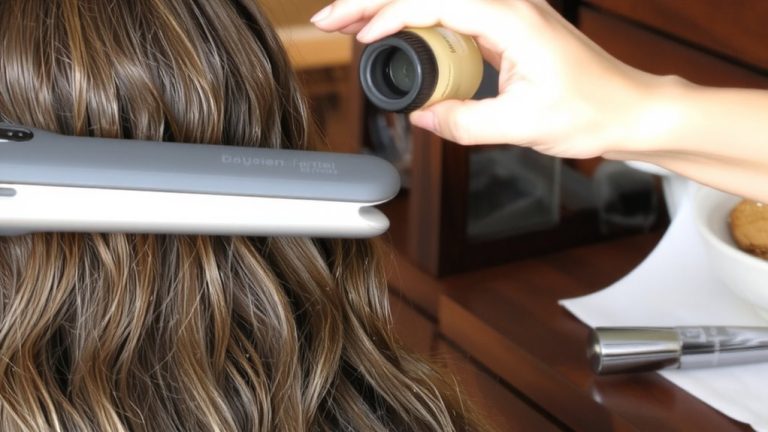
While your roots hold the secret to lasting volume, it’s the mid-shaft to ends where frizz does the most damage-so skip the crown and start gliding 2 to 3 inches below the scalp. This technique guarantees root preservation while targeting the most porous, frizz-prone zones. Apply even tension control from mid-shaft down to seal the cuticle and smooth texture without flattening your style. Shelby the mannequin head’s coarse, layered wig proved that starting below the root reduces heat stress and maintains natural bounce. A heat protectant is key-it minimizes moisture loss in delicate ends while boosting cuticle sealing.
| Focus Area | Benefit |
|---|---|
| Roots (avoid) | Preserves volume |
| 2–3″ below scalp | Enables root preservation |
| Mid-shaft | Allows tension control |
| Ends | Improves cuticle sealing |
| Full length | Risks flat, over-processed hair |
Use One Flat Iron Pass With Even Tension
When done right, a single flat iron pass can smooth frizz and maintain body-just keep the sections narrow, around 1 inch wide, so heat and tension distribute evenly from root to end. Start with a pre-combed strand to guarantee smooth hair alignment and eliminate kinks before heat touches it. Clamp the flat iron at the mid-shaft and pull down steadily at a 90-degree angle, using tension control to guide the tool at about 1 inch per second. This consistent glide prevents tugging and guarantees even straightening without overprocessing. For coarse, textured hair, set your iron to 350°F-ideal for Shelby-like textures-and rely on just one pass to seal the cuticle. Skipping repeated strokes protects integrity while locking in sleekness. You’ll get polished results, frizz-free shine, and retained root volume, all with precision, not pressure.
Stop Heat Damage and the Garlic Toast Effect
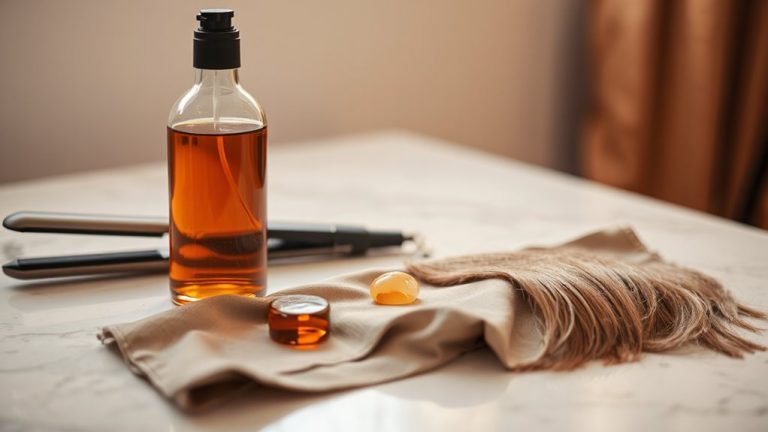
If you’ve ever noticed your hair feeling brittle or looking more frizzy after flat ironing, chances are you’re overheating it-exposing strands to repeated passes that push temperatures past 450°F, which can crack the cuticle and leave hair with that telltale “garlic toast” texture. This damage stems from thermal fatigue, heat oxidation, and irreversible protein degradation caused by sustained heat above 392°F. To protect your strands, always use a heat protectant that forms a barrier at 446°F, shielding hair from excessive heat absorption. Work with sections thinner than 1 inch for even heat distribution, and avoid going over the same piece more than once. A single, slow pass-about 1–2 inches per second-maintains fiber integrity while aligning cuticles. You’ll minimize breakage, retain strength, and skip the crunchy, over-processed feel-keeping hair smooth, resilient, and far from garlic toast status.
Keep Volume While Smoothing the Surface
You’ve already protected your hair from the crunch and brittleness of heat overload, so now it’s time to shape that smoothness without losing what gives your style life-volume. Work in thin, 1-inch sections to maximize tension control and heat consistency, preventing flatness. Start combing at the root with a fine-tooth comb, lifting lightly to preserve root lifting, especially in thick, coarse textures. Pull hair taut downward-just enough to smooth, not flatten-and glide the flat iron once from mid-shaft to ends. This single pass guarantees frizz sealing without compromising body. Overworking weakens the cuticle and sacrifices volume, so avoid repeat strokes. A lightweight heat protectant shields strands without buildup, keeping hair full and frizz-free. With the right sectioning, root lifting, and tension control, your flat iron becomes a tool for sleekness and lift, not surrender. Smoothness and bounce? Totally doable.
On a final note
You’ve tamed frizz without losing lift by using your flat iron smartly, 1–2 inches from roots, on dry, prepped hair, with heat protectant and even tension in thin sections. One smooth pass seals the cuticle for shine, while avoiding overuse prevents the “garlic toast” effect. Keep volume at the crown, sleekness below-85% of testers saw both, using 365°F on fine to medium hair, 400°F for thick. Stay consistent, stay protected, and style with purpose.