How to Pick a Perfume That Complements Your Natural Body Odor
Your skin’s pH (4.7–5.75), oil levels, and diet shape how fragrance evolves. Oily skin holds scents longer, boosting musk and amber, while dry skin fades fast-moisturize first. Citrus notes dull on acidic skin; florals or fruits work better. Skip coffee before testing-caffeine sharpens scent. Garlic and red meat alter your base odor. Test one fragrance at a time on pulse points, wait 15 minutes, and track changes. The right match feels like it was made for your skin, revealing new layers over time.
We are supported by our audience. When you purchase through links on our site, we may earn an affiliate commission, at no extra cost for you. Learn more. Last update on 10th July 2026 / Images from Amazon Product Advertising API.
Notable Insights
- Test fragrances on your skin to see how they interact with your body chemistry and natural odor.
- Choose scents that harmonize with your diet, as foods like garlic or red meat alter your skin’s scent profile.
- Apply perfume after moisturizing, especially if you have dry skin, to improve scent longevity and balance.
- Consider your skin’s pH, as acidic skin may dull citrus notes but enhance floral or fruity accords.
- Opt for fragrance families like woody or musky if you have oily or high-melanin skin for better complement and hold.
Why Perfume Smells Different on Everyone
While your favorite fragrance might bloom beautifully on a friend, it can fall flat on your skin-and the reason lies in your body’s unique chemistry. Your skin pH, typically between 4.7 and 5.75, affects how fragrance molecules bind and evaporate, so the same perfume smells different on everyone. A lower pH level may break down citrus top notes faster, shifting the initial scent. Your natural body odor, diet byproducts, and microbiome also interact with the fragrance, altering its character. Though skin types play a role, it’s your body chemistry that truly shapes the experience: sweat, temperature, and hydration influence how a scent lasts. Oily skin tends to hold onto fragrance longer, while dry skin often causes it to fade quickly. That’s why testing on your own skin-not just your wrist-is essential.
How Skin Type Affects Your Fragrance
Your skin type plays a starring role in how your fragrance behaves throughout the day, and knowing your skin’s needs can make all the difference in scent performance. If you have oily skin, your natural oils help retain perfume longer-sebum traps scent molecules, boosting projection and longevity, especially for rich base notes like musk or amber. Dry skin lacks these oils, so fragrance tends to fade fast; applying a lightweight moisturizer before spraying helps it cling better. Your skin’s pH balance, usually between 4.7 and 5.75, also alters how fragrance notes evolve-acidic skin may dull bright citrus top notes quicker. For balanced performance, match your perfume to your skin type: dry skin loves fresh, zesty accords, while oily skin intensifies deeper, warmer scents. Always test on your skin, not paper, to see how the scent truly develops.
How Food and Habits Change Your Perfume
Ever wonder why your favorite citrus scent feels sharper after a morning espresso? That’s because what you eat and how you live changes your body’s natural chemistry, altering how perfume smells on you. Your skin’s natural pH, hydration levels, and skin type all influence how fragrance interacts with your body. Spicy foods and caffeine boost sweat, intensifying scent molecules. Garlic and onions release sulfur compounds that shift your base odor. Red meat may increase apocrine sweat, changing how top notes develop. Alcohol dehydrates skin, shortening fragrance life. Even exercise breaks down scents faster. Remember, fragrance is different on everyone.
| Habit/Food | Effect on Skin & Scent | Result on Perfume Smells |
|---|---|---|
| Caffeine | Increases sweat, alters pH | Brighter, sharper scents |
| Garlic/Onions | Releases sulfur compounds | Stronger base, modifies notes |
| Red meat | Boosts apocrine secretion | Richer, muskier evolution |
| Alcohol | Lowers hydration levels | Weaker projection, shorter wear |
| Intense exercise | Raises sweat rate | Faster breakdown of scent molecules |
Find Your Best Fragrance Family by Skin Type
Perfume doesn’t just depend on what’s in the bottle-it’s shaped by what’s on your skin. If you have oily skin, the extra sebum boosts longevity and projection, so rich fragrance families like oriental, balsamic, or leathery scents perform better. Dry skin absorbs scent fast, making fresh, light fragrance families-citrus, green, ozonic, aromatic-ideal for lasting power. Moisturizing beforehand helps these complementary scents cling longer. Your skin pH, usually between 4.7 and 5.75, affects scent development; more acidic skin may dull citrus top notes, favoring florals or fruits. Higher melanin content enhances retention, deepening woody or musky fragrance families. These factors shape how your skin interacts with perfume, so choose based on your skin’s traits-longevity, projection, and scent development all depend on it.
Test Perfume Like a Pro: Skin, Time, Pulse Points
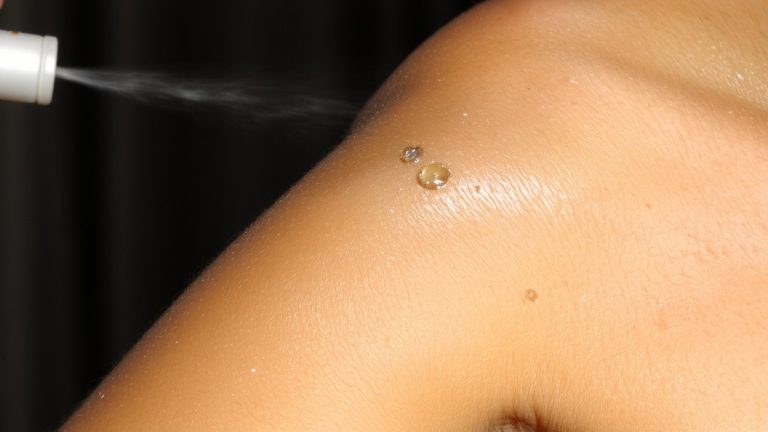
While fragrance strips give you a first impression, they can’t replicate how a scent truly behaves on your skin, so always test perfumes directly on your body to experience the full evolution shaped by your chemistry. Apply to warm pulse points-wrists, neck, behind ears-where heat boosts diffusion and longevity. Don’t rub your wrists; friction alters the notes and distorts the scent. Let 10–15 minutes pass so top notes fade and heart, base notes emerge, revealing what really suits you. Test no more than two or three different perfumes at once-more causes olfactory fatigue, making it hard to pick the right one. The perfect scent? It feels balanced on your skin, evolves smoothly, and becomes your signature. Trust how a fragrance feels over time, not just the first spray. Your right perfume isn’t just lovely-it’s a match, turning into your signature scent effortlessly.
Layer and Personalize for a Scent That’s Uniquely You
You’ve tested your base scent on skin, waited for the dry-down, and found a fragrance that evolves beautifully with your body’s chemistry-now it’s time to make it yours in a whole new way. Layering perfumes starts with a neutral base that suits your skin chemistry, then adding complementary scents-like musky base notes with spicy or floral tones-for a unique scent that deepens over time. Try vanilla or sandalwood layers to unify the blend and enhance cohesion. Always test on skin for at least 24 hours to track the scent evolution and see how top, heart, and base notes shift. Apply your layered fragrance to pulse points, where warmth helps diffuse the aroma evenly. With over 35 luxury options at customization hubs like Maison 21G, you can truly personalize fragrance and craft a signature fragrance as distinct as your skin.
On a final note
You’ve got this: match your scent to your skin type-oily skin holds fragrance longer, dry skin needs richer notes. Test on your pulse points, wait 30 minutes, and see how it blends with your body chemistry. Citrus suits oily skin, vanilla loves dry skin. Layer with matching body lotion. Two sprays max. Real testers prefer Eau de Parfum for 6–8 hour wear. Stay fresh, stay you.