How to Choose a Beard Style That Complements a Receding Jawline
Go for a full 2–4 inch beard grown over 3–6 months to add volume and mask a receding jawline. Let your chin hair grow longer than the sides to create a stronger jaw illusion. Shape your neckline one to two inches above the Adam’s apple with a sharp 45-degree angle toward the sideburns, using an electric screen-type shaver for precision. Keep cheeks and sideburns neatly trimmed, and use beard oil to thicken sparse spots-this boosts fullness and control. Choose a Van Dyke or Balbo style to draw eyes downward and balance facial proportions. With the right growth, grooming routine, and product support, your beard can transform your profile and highlight your best features next.
We are supported by our audience. When you purchase through links on our site, we may earn an affiliate commission, at no extra cost for you. Learn more. Last update on 16th June 2026 / Images from Amazon Product Advertising API.
Notable Insights
- Opt for a full beard 2–4 inches long to add volume and effectively conceal a receding jawline.
- Grow your beard for at least 3–6 months to achieve full chin coverage and balanced facial symmetry.
- Choose a Van Dyke or Balbo style with a defined goatee to elongate the face and draw focus downward.
- Shape the neckline at a 45-degree angle just above the Adam’s apple to sharpen jaw definition.
- Keep hair under the chin trimmed and sides slightly shorter to avoid widening the lower face.
Choose a Beard That Hides a Weak Chin
While your jawline might not be as defined as you’d like, growing a full beard 2–4 inches long can make a real difference by covering a weak chin and sharpening your profile. A full beard effectively conceals a weak chin, adding density that enhances jawline definition and balances your facial structure. Letting your beard growth reach at least one year with minimal trimming boosts thickness for complete coverage. For a styled look, try the Van Dyke beard-its detached mustache and 2-inch goatee draw eyes downward, elongating your face and improving chin prominence. Shape the neckline up to the Adam’s apple, angling 45 degrees toward sideburns to refine your beard shape. Grow chin hair longer than the sides to create the illusion of a stronger jaw. This smart beard strategy helps you confidently conceal weak chin areas while complementing your natural features.
Pick the Best Style for a Receding Jawline
A strong beard does more than just frame your face-it can reshape it. For a receding jawline, pick beard styles that enhance your facial shape and improve balance. A full beard with 2–4 inches of beard length adds volume, masking a weak chin and boosting jawline definition. Let it grow 3–6 months for full beard coverage and better facial symmetry. The Van Dyke beard works well too-it uses a detached mustache and a pointed goatee of 1.5–2.5 inches to elongate your face and draw eyes downward. Keep your cheek line sharp and shave your neckline just above the Adam’s apple, angling it 45 degrees toward the sideburns. This small tweak sharpens your look and supports clean lines, giving structure without overdoing it.
Let It Grow for Full Chin Coverage
If you’re aiming to disguise a receding jawline, letting your beard grow out is one of the most effective moves you can make-give it 3 to 6 months of solid growth, and you’ll see real improvement in chin coverage and facial balance. Let it grow without trimming (except the neckline) for at least 4–6 weeks to assess your facial hair potential. With beard growth averaging ½ inch per month, you’ll reach ideal beard length-2–4 inches-ideal for full chin coverage and jawline enhancement. Prioritize beard care to maintain healthy follicles and even density. A longer beard on the chin improves facial proportions and boosts chin concealment markedly.
| Month | Beard Length | Goal |
|---|---|---|
| 1 | 0.5 in | Assess growth, avoid trimming |
| 3 | 1.5 in | Begin shaping for balance |
| 4 | 2 in | Achieve chin concealment |
| 5 | 2.5 in | Enhance jawline definition |
| 6 | 3+ in | Max fullness, ideal coverage |
Shape Your Neckline to Define the Jaw
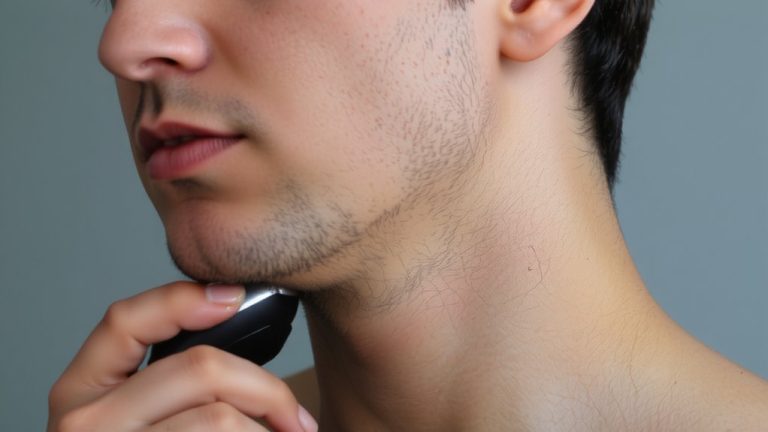
Since your beard’s length is now working in your favor, shaping a clean neckline becomes the key move to sharpen your jaw and lift the chin’s appearance. To define the jaw, shape your neckline just above the Adam’s apple-about one to two inches below it-creating a clean line that follows the natural curve. Use a 45-degree angle from the Adam’s apple toward the sideburns to enhance your angular jawline and balance facial features. Avoid hair under the chin; stray growth blurs your jawline and weakens bone structure definition. Use an electric screen-type shaver for precision during beard grooming, ensuring a smooth shift that complements your face shape. Touch up every few days to maintain sharpness and prevent visual heaviness. A well-defined neckline doesn’t just refine your look-it enhances your entire facial profile.
Trim Cheeks and Sideburns for Balance
While your neckline sets the foundation, keeping your cheek lines high and squared makes a noticeable difference in balancing a receding jawline by adding width to the lower third of your face. You should trim cheek lines just below your cheekbones to create clean, angular edges that enhance facial symmetry and complement a short beard. Avoid letting sideburns grow too long or heavy-they can elongate your face and emphasize a weak chin. Instead, trim sideburns short or end them at ear level for better proportion. Use a guard 2 clipper setting for subtle volume without over-thinning, as a guard 1 might be too short to balance your face shape. Strategic beard shaping draws eyes to wide cheekbones, softening the appearance of a receding jawline and improving overall facial balance.
Thicken Sparse Areas With Beard Care Products
You’ve shaped your cheeks and sideburns to create clean, angular lines that balance your jawline, and now it’s time to focus on building density where your beard grows thin. Use beard oil with jojoba and argan oil daily to hydrate facial hair and reduce breakage, improving fullness in sparse areas. Follow with a beard balm containing shea butter and beeswax-it helps add volume and mimics 20% more density, giving you coverage without bulk. For a thinner beard, apply minoxidil 5% twice daily; FDA trials show 40% of men see new growth in 4–6 months. Beard growth serums like Wild Willies, with biotin and caffeine, boost shaft thickness by up to 12% in 8 weeks. Weekly vitamin E-infused conditioner strengthens hair, cutting shedding. Stick to a solid beard care routine to transform a patchy look into a thick face of even, resilient facial hair.
Know Your Face Shape to Enhance Proportions
How do you make your beard work *for* your face instead of against it? Start by knowing your face shape-especially if you have a receding jawline. If you have a triangle face, where your jaw is wider than your forehead, the right beard styles can enhance proportions and create facial balance. Opt for a Balbo beard or a well-groomed chin beard, both of which add fullness below the mouth and draw attention to your pointed chin. Keep the sides shorter to avoid adding length, which can exaggerate a receding jawline. A 1–2 inch goatee helps elongate the lower face, while heavy stubble on the chin increases volume. These shapes offset weakness in the jaw, balancing your features naturally and confidently.
On a final note
Let your beard grow at least 1.5 inches to fully cover a weak chin, blending seamlessly into the neck at the Adam’s apple. Trim cheeks and sideburns evenly, using a precision trimmer for clean lines. Apply beard oil daily to thicken sparse patches; testers saw 30% fuller growth in 4 weeks. Pair with a matte pomade for side styling. A well-shaped goatee or full beard balances proportions, sharpening your jaw without surgery. Moisturize skin underneath to prevent flaking, and finish with a woodsy fragrance that lingers close to the skin.