Establishing Baseline Records for Monitoring Melanonychia Development
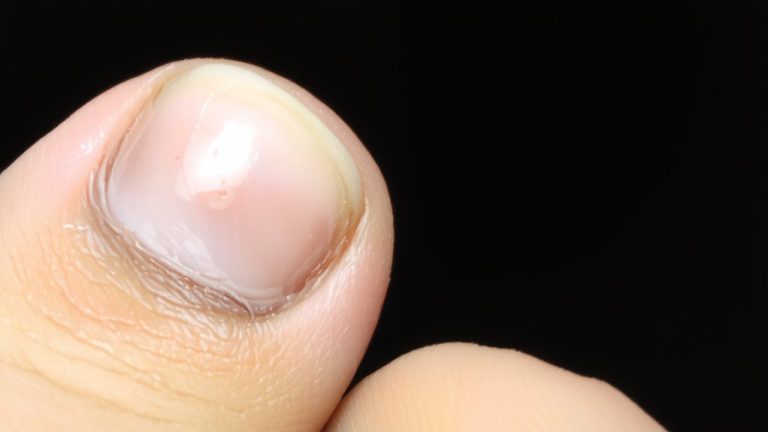
You need dermoscopic images to establish a baseline for melanonychia, especially if the pigmented band is wider than 3 mm, starts in the nail matrix, or shows micro-Hutchinson’s sign. Track color, symmetry, and edge structure-brown backgrounds and irregular parallelism raise melanoma concern, while gray tones are often benign. Capture all affected nails and use serial imaging every 6 months; any change in width, color, or pattern means it’s time to act. Spot subtle shifts early, and you’ll know exactly when to move from monitoring to biopsy.
We are supported by our audience. When you purchase through links on our site, we may earn an affiliate commission, at no extra cost for you. Learn more. Last update on 20th June 2026 / Images from Amazon Product Advertising API.
Notable Insights
- Capture dermoscopic images to establish a visual baseline for longitudinal monitoring of melanonychia.
- Record pigmented band width, particularly if greater than 3 mm, to assess melanoma risk.
- Document the origin of pigment within the nail matrix to differentiate benign from malignant causes.
- Note the presence of micro-Hutchinson’s sign during dermoscopy as a critical marker for malignancy.
- Count and record the number of affected nails, as multifocal involvement influences diagnostic interpretation.
What Baseline Documentation Prevents Missed Nail Melanoma
While you might not think a single photo can make a difference, capturing baseline dermoscopic images of longitudinal melanonychia actually gives you a powerful tool to catch melanoma early, especially since subtle shifts in pigment width, color-like changes from uniform brown to uneven gray-or pattern irregularity often show up before any obvious clinical warning signs. Your baseline documentation, using dermoscopy, records key details: the pigmented nail band’s width (especially if >3 mm), origin in the nail matrix, and presence of micro-Hutchinson’s sign-pigment creeping into the proximal nail fold, visible only under magnification. You also note how many nails are involved, since single-digit changes raise melanoma concerns, unlike benign, multi-nail melanocytic activation. With digital monitoring, you objectively track evolution over time, catching early signs like darkening or proximal extension before they’re visible to the naked eye-giving you a precise, actionable timeline when action is most effective.
Measurable Signs That Signal Nail Melanoma Risk
A single dark streak on your nail can raise big questions, but it’s the measurable details that tell the real story. A pigmented band wider than 3 mm, especially in adults, increases nail melanoma risk. Brownish background color in longitudinal melanonychia suggests melanocytic hyperplasia, often linked to malignant change, while grayish tones are more likely benign. Dermoscopy reveals critical clues: irregular parallelism points to malignancy, unlike the neat lines of benign nevi. If you see a micro-Hutchinson sign-pigment creeping into the cuticle under dermoscopy-or full Hutchinson sign with spread to the hyponychium, it’s time for biopsy. The nail matrix’s involvement raises stakes.
| Feature | Risk Indicator |
|---|---|
| Band width >3 mm | Higher melanoma risk |
| Irregular parallelism | Malignant pattern |
| Micro-Hutchinson sign | Melanocytic malignancy |
| Pigmentation on free edge | Suggests subungual melanoma |
Dermoscopic Red Flags in Longitudinal Melanonychia
When you’re checking a dark nail streak, dermoscopy is your best tool for spotting danger signs, and irregular patterns should catch your attention fast. In longitudinal melanonychia, dermoscopic red flags like irregular parallel lines, a brown background, and asymmetry in color suggest possible malignancy. Look closely for micro-Hutchinson’s sign-pigmentation in the cuticle seen only under dermoscopy-as it’s a strong biopsy indication. Abrupt pigment alignment and chaotic structure heighten concern. Though a globular dermoscopic pattern may show melanophages and link to benign cases like blue nevus, it still demands careful assessment. You don’t need advanced tools-just a 10x handheld dermatoscope to spot disruptions in pigment bands. If color spreads unevenly or borders look jagged, don’t wait. These visual cues, combined with clinical judgment, guide timely decisions. Capture images for tracking, but when red flags stack, biopsy comes before monitoring.
When to Biopsy vs. Monitor Based on Serial Dermoscopy
You’ve got a handle on the red flags, so now it’s time to decide whether to biopsy or keep monitoring based on what serial dermoscopy reveals. If your patient’s longitudinal melanonychia shows stability-regular pigmented nail bands with parallel lines-monitoring every 6 months is safe, especially in low-risk cases. But dynamic changes seen on dermoscopy, like micro-Hutchinson sign or asymmetric widening, mean it’s time for biopsy. A band wider than 3 mm or disruption in nail matrix pigmentation raises suspicion for subungual melanoma, so don’t delay biopsy.
| Feature | Action |
|---|---|
| Stable dermoscopy | Monitoring |
| Irregular pigmentation | Biopsy |
| Brown background, disrupted lines | Biopsy |
| Serial dermoscopy changes | Biopsy |
On a final note
You’ve got this: snap clear dermoscopic photos every 3 months to track nail pigment changes, using a millimeter ruler for scale. If the band widens past 3 mm, shifts color unevenly, or shows jagged edges, see your dermatologist. Stick with broad-spectrum SPF 30+ nail polishes like COOLA SPF 30 Cuticle Oil. Early action, not panic, saves lives-consistent monitoring is your best defense against missed melanoma.