Avoiding Orange Cast When Applying Terracotta Bronzers on Fair Skin
You avoid orange cast by choosing cool-toned bronzers with gray or taupe bases, like Merit Bronze Balm in Clay or Rare Beauty Bright Side, which stay true on fair, pink undertones. Use a pea-sized amount with a fluffy brush, blending along your hairline and jaw in natural light. Warm formulas like Hoola often oxidize orange, so test first on your jawline. If it turns too warm, correct with a blue-based concealer or set lightly with ash-toned powder-seamless warmth is possible.
We are supported by our audience. When you purchase through links on our site, we may earn an affiliate commission, at no extra cost for you. Learn more. Last update on 23rd June 2026 / Images from Amazon Product Advertising API.
Notable Insights
- Choose cool-toned bronzers with gray or taupe bases to prevent orange shifts on fair, pink undertones.
- Avoid heavily pigmented warm or red-leaning formulas that react with cool undertones and cause orange cast.
- Apply terracotta bronzers sparingly with a fluffy brush, blending along hairline and jawline in circular motions.
- Test bronzers on your jawline in natural light to detect hidden orange undertones before purchasing.
- Correct orange cast using blue-based correctors or by mixing bronzer with cool-toned foundation for balance.
Why Bronzers Turn Orange on Fair Skin
While you might think a universally flattering bronzer should work for all skin tones, if you have fair skin with pink undertones, you’ve probably noticed how easily warm-toned formulas can shift into an unflattering orange. That’s because yellow-based, copper-rich, or terracotta pigments react with your cool undertones, making bronzers like Benefit Hoola, BE Warmth, or St Tropez look orange instead of sun-kissed. Even products labeled “not orange” often oxidize darker, leaving you with an unnatural hue. Warm bronzers lack the balance your skin needs, so they don’t meld-they mask. You don’t just see bronze; you see orange. To avoid orange, skip heavily pigmented or red-leaning formulas. Choose sheer, neutral-matte finishes instead. Always swatch on your jawline in natural light. If it skews warm or shifts tone after blending, it’ll look orange by midday. Testing prevents regret, so don’t skip this step.
Cool-Toned Bronzers That Won’t Look Orange
You’ve probably experienced how warm bronzers can turn orange on fair skin, especially when yellow- or red-based pigments clash with your cool undertones. To avoid orange cast, try cool-toned bronzers formulated with gray or taupe bases instead of red or yellow. The Rare Beauty Bronzing Stick in Bright Side gives a matte, cool finish that blends seamlessly, while Merit Beauty Bronze Balm in Clay adds subtle dimension without warmth. Nudestix Bronze in Manila is another solid pick, delivering a soft, neutral bronze effect in a convenient stick form. These cool-toned bronzers are made to help you find the right match-offering sculpted definition without unnatural tones. Unlike warm terracotta formulas like Benefit Hoola, these shades stay true on fair complexions. With creamy, buildable textures and smart undertones, they’re your best bet to avoid orange cast and keep your bronze natural, fresh, and totally balanced.
How to Apply Bronzer Without Orange Fallout
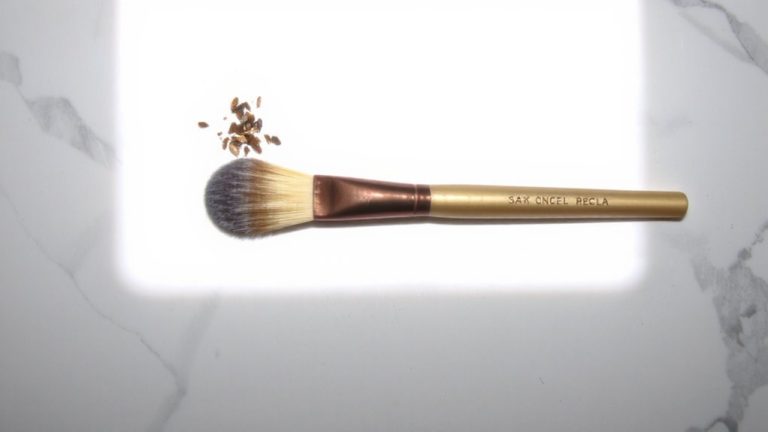
Since uneven application can intensify pigment shifts and lead to unwanted orange tones, start with a small amount of bronzer-about the size of a pea-on a large, fluffy powder brush like the Bobbi Brown Face Blender, which disperses color evenly and blurs edges seamlessly. Use circular motions to blend along the hairline, jawline, and cheekbones, building slowly to avoid over-pigmentation. Opt for cool-toned formulas like Merit Beauty Bronze Balm in Clay or Stila #2, a cream-to-powder bronzer testers confirm doesn’t turn orange on fair skin. Always test shades in natural light at stores like Sephora-warm lighting hides orange undertones. Choose non-comedogenic options for smooth wear. Applying this way guarantees a natural warmth, not an orange bronzer effect, even with terracotta-based products. Build gradually, blend thoroughly, and stick to cool, ashy shades to maintain a balanced, realistic finish.
Fix Orange Bronzer: Color-Correcting Hacks
A blue-based color corrector is your best bet for canceling out unwanted orange tones in terracotta bronzers, thanks to color theory-since blue sits opposite orange on the color wheel, it neutralizes warmth effectively. If you find your liquid bronzer too warm, try layering a pea-sized amount of green-tinted corrector to shift it toward a more natural, olive finish, especially if you have fair skin with pink undertones. Many testers report success by mixing the bronzer with a cool-toned foundation or dusting on a blue-toned setting powder lightly. Always apply and assess corrections in natural light-you’ll find subtle shifts easier to manage this way. Use and Privacy policies don’t affect your technique, but smart layering does. Cool-toned powders can tone down shine while balancing warmth, so keep one handy for quick fixes.
Test Bronzers Before You Buy
Don’t guess your bronzer shade-see it on your skin first. Fair skin, especially with pink undertones, can turn terracotta bronzers orange if they’re not tested. Always test bronzers before you buy to avoid costly mistakes and returned products. Swatch in natural light to see the true tone after oxidation. Sephora lets you try Nars Laguna, Clarins liquid bronzer, and more in-store. No Sephora nearby? Hit mall counters for the same shade testing.
| Place | Product Tested | Best For |
|---|---|---|
| Sephora | Nars Laguna | Subtle warmth |
| Mall Counter | Clarins Liquid Bronzer | Hydration + color |
| Natural Light | Multiple Shades | Truest match |
| Wrist Check | Cream Formulas | Blend testing |
| Jawline Swatch | Matte Finishes | Seamless edges |
You’ll save time and boost confidence when you test bronzers before you buy using natural light and real skin.
On a final note
You’ve got this: pick cool-toned, matte bronzers with zero red or yellow bias, like those with taupe or mushroom undertones, and apply lightly with a fluffy brush. Test first on your jawline in natural light to dodge orange fallout. If it turns orange, tone it down with a lavender color corrector. Real testers swear by powder formulas over creams for fair skin-less muddying. Stick to buildable coverage, and you’ll get warmth without the weirdness.