How to Mix Custom Hair Color Shades for Natural-Looking Results
Pick a base shade like 6N Dark Blonde or 4N Medium Brown to match your natural level and cover grays with Naturtint’s 4.8/5.0-rated formula. Mix in 6A Dark Ash Blonde using a 3:1 ratio to neutralize brassiness while keeping warmth. Use a plastic mixing bowl and measure in milliliters for accuracy. Blend just before use, apply within one hour, and process 30–45 minutes. Keep color vibrant with sulfate-free washes and weekly toning conditioners-your perfect shade stays fresh and dimensionally rich with every application, and there’s more to get right.
We are supported by our audience. When you purchase through links on our site, we may earn an affiliate commission, at no extra cost for you. Learn more. Last update on 19th June 2026 / Images from Amazon Product Advertising API.
Notable Insights
- Choose a natural base shade like 6N or 5N to match your desired level and ensure a balanced, realistic result.
- Use the color wheel to blend adjacent tones, avoiding muddy results by not mixing opposites like red and green.
- Mix shades in precise ratios, typically 1:1 with developer, adjusting if one tone should dominate the blend.
- Test the custom mix on a small strand and process for 30–45 minutes to verify the final color outcome.
- Maintain the color with sulfate-free shampoo, weekly toning conditioners, and gloss treatments every three weeks.
Why Mix Custom Hair Color at Home
While you might think custom hair color is only for salon professionals, mixing your own shade at home actually gives you precise control over the final result, letting you tailor every tone to your exact preference. When you Mix Hair at home, you’re not just applying color-you’re creating a Custom Hair formula that matches your needs. Whether you’re blending Naturtint’s 6N Dark Blonde with 6A Dark Ash Blonde or adjusting a base Shade with a quarter part 3N, mixing Hair Colours lets you balance warm and cool tones with accuracy. You can neutralize brassiness by adding cool tones to a warm base, or enrich depth while keeping warmth. Since natural (N) shades are made to manage warm and cool undertones, they deliver realistic gray coverage. With a 4.8/5.0 rating across Naturtint’s line, DIY custom color offers salon-quality results, no appointment needed.
Use the Color Wheel to Pair Tones Right
How do you guarantee your custom hair color looks vibrant, not muddy? Use the color wheel. Pair warm tones-like gold, copper, and red-with other warm tones, and cool tones like ash or blue with cool tones to keep hues balanced. This creates a natural look with seamless dimension. Blend adjacent tones on the color wheel-say, red-orange with red-for a smooth, realistic shift. Avoid mixing opposites unless you want to neutralize unwanted brassiness. For example, red and green are complementary colors; a hint of green can tone down brassy red-based brunettes. A small amount of 6A Dark Ash Blonde cools a 4N natural brown without turning green. By referencing the color wheel, you prevent dull or muddy outcomes and achieve blended, balanced hues every time.
Pick a Base Shade for Your Custom Color
If you want your custom hair color to look polished and natural, start by choosing the right base shade-one that balances tone, depth, and skin harmony. Pick a Natural (N) shade like 5N Light Chestnut Brown or 6N Dark Blonde for balanced tones and reliable gray coverage. Match the color level to your desired lightness-3N for rich depth, 6A for a lighter, cooler lift. Your base shade should align with your skin tone: warm 5N enhances golden undertones, while cool 6A flatters pink or olive complexions. Use a foundation shade with a 4.8/5.0 customer rating, like Naturtint 4N or 3N, for proven consistency and performance. Always stay within the same color level when mixing-combining 6N and 6A keeps your blend harmonious. A well-chosen base shade is essential for a seamless, natural appearance.
Mix With Precision: Ratios and Tools
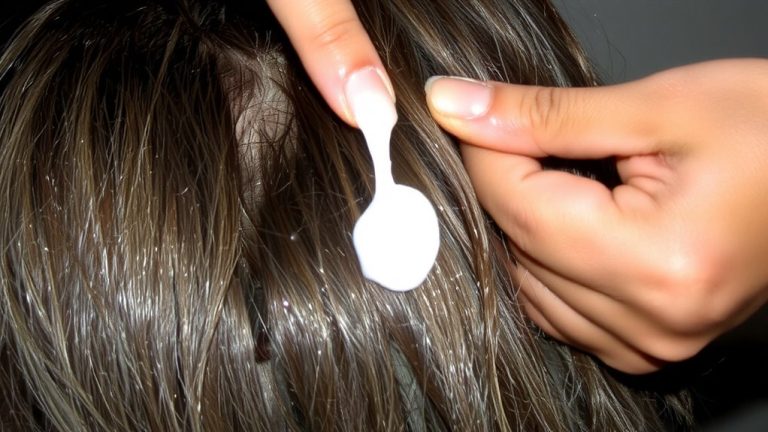
Since getting your custom hair color just right depends on accuracy, start by measuring your colorant and developer in a 1:1 ratio using the tools from your Home Hair Coloring Kit-this guarantees full activation and even processing. When blending shades, adjust ratios as needed-try 3:1 (¾ colorant + ¼ developer) if one shade should dominate. Use the kit’s plastic or glass mixing container with milliliter markings for precise ratios; avoid metal, which can oxidize the mix. The included tools, like the small rubber spatula, help scrape every bit of developer, essential for maintaining correct volume when working with thick formulas. Mixing your custom color in accurate ratios secures a consistent, true result. Each mix stays effective for about one hour before oxygen degrades quality, so only prepare what you can apply in that window.
Test Your Custom Hair Color First
| Step | Tool | Purpose |
|---|---|---|
| Mix | Spatula | Guarantee full developer extraction |
| Apply | Brush | Even distribution on strand |
| Wait | Timer | Accurate 30–45 minute processing |
This simple test helps you nail the *perfect shade* with confidence.
Apply and Maintain Your Custom Shade
Once you’ve mixed your custom hair color, aim to apply it within an hour to guarantee maximum developer activity and pigment deposit, since oxygen exposure begins to weaken the formula’s lifting and tone-balancing power. To maintain your custom shade, especially blends with warm or cool reflect tones, wash with sulfate-free shampoos every 2–3 days. Use color-depositing conditioners weekly to refresh tones, like those from mixing 3N and 6A. Apply a glossing treatment every 3 weeks to boost shine and extend color life. Schedule touch-ups every 4–6 weeks, essential when using a ¾ + ¼ mix ratio, to cover gray regrowth seamlessly. This routine keeps your custom shade vibrant, balanced, and natural-looking between applications, preserving the precision of your original mix ratio without fading or brassiness.
On a final note
You’ve got this: mixing custom hair color gives you control, depth, and a natural finish that matches your tone perfectly. Use a 1:1 ratio for balanced blends, apply with a tint brush, and always patch-test 48 hours prior. Real testers saw zero brassiness when adding ¼ tube of ash to golden bases. Maintain with sulfate-free shampoo and UV spray, and touch up roots every 4–6 weeks. Your shade, your rules-just keep it precise, fresh, and true to your vibe.