How to Pick a Perfume That Complements Your Natural Body Chemistry
Your body chemistry changes how perfume smells, so always test on skin, not paper. Oily skin holds scent longer-up to 50% more with moisturizer-while dry skin fades fast, especially citrus notes. Skin pH (typically 4.7–5.75) shifts fragrance balance: acidic skin dulls bergamot, higher pH boosts musk. Avoid coffee and spicy foods before testing-they alter sweat and pH. Spray on pulse points, wait 10 minutes, then recheck at 4+ hours to see the real scent story unfold.
We are supported by our audience. When you purchase through links on our site, we may earn an affiliate commission, at no extra cost for you. Learn more. Last update on 22nd June 2026 / Images from Amazon Product Advertising API.
Notable Insights
- Test fragrances on your skin, not blotter strips, to see how they interact with your body chemistry.
- Apply perfume to pulse points like wrists and neck for accurate scent development over time.
- Moisturize skin before applying fragrance to improve longevity, especially if you have dry skin.
- Consider your skin’s pH and type-oily, dry, or acidic skin alters how notes evolve and last.
- Reassess the scent after 4–6 hours to experience how base notes blend with your natural odor.
Why Perfume Smells Different on Everyone
While no two people experience a fragrance quite the same way, it’s not just imagination-your skin’s unique chemistry literally changes how a perfume smells. Your Body Chemistry, including pH level (typically 4.7 to 5.75), alters how fragrance molecules evaporate and bind to your skin. Different skin types react uniquely: hydration levels and sebum production affect how long the scent lasts. Oily skin holds fragrance longer due to the skin’s natural lipids, while dry types lose notes faster. Molecular interactions between your skin and the perfume transform top, heart, and base notes in real time. Even your personal scent-shaped by genetics, diet, and hormones-shifts how others perceive the fragrance. That’s why testers often say a perfume smells different on their friend. For best results, test on your own skin, not a blotter, and recheck after 30 minutes as the scent develops.
How Oily or Dry Skin Affects Perfume Longevity
Your skin type plays a major role in how long your perfume lasts, building on the way body chemistry shifts a fragrance’s character. If you have oily skin, the excess sebum helps trap fragrance molecules, boosting longevity by several hours and intensifying base notes like musk or vanilla. This means your scent often projects more and fades slower. Dry skin, lacking natural oils, causes perfume to evaporate quickly-testers report reapplying within 2–4 hours. Moisturizing before spraying can increase longevity by up to 50%, creating a hydrated base that slows evaporation. While oily skin may heighten certain notes due to pH balance, dry skin’s acidity can make citrus top notes disappear faster. Regardless of skin type, understanding how your skin interacts with fragrance helps you choose wisely and wear with confidence.
Does Your Skin’s pH Change How Perfume Smells?
What if the reason your perfume smells different from your friend’s isn’t the fragrance itself but the chemistry of your skin? Your skin pH, typically between 4.7 and 5.75, changes how fragrance molecules behave. If your skin’s more acidic (below 4.7), top notes like citrus and bergamot may fade fast, while higher pH can boost base notes like musk or amber by increasing molecular volatility. Even with the same perfume, the fragrance interacts uniquely based on your skin type and pH. This is why scents that align with your natural body odor last longer and smell more balanced. Because skin pH varies due to genetics, hygiene, or skincare, perfume smells different on everyone. Test fragrances on your skin-not paper-since real performance depends on how the scent develops over hours. Knowing your pH can help you pick wisely.
How Coffee, Spicy Food, and Sweat Alter Your Perfume
Since what you eat and how your body responds can reshape a fragrance’s journey on your skin, it’s no surprise that your morning latte or spicy lunch might be messing with your perfume’s staying power. Your body heat and sweat, boosted by coffee and spice, speed up evaporation of top notes and shift how fragrance notes unfold. Capsaicin and sulfur compounds alter your skin’s natural pH, distorting lighter scents while intensifying deeper base notes. Alcohol and caffeine also dry your skin, weakening perfume scent adherence-especially if you already have dry skin. Sweat can remove up to 50% of different perfumes from your skin, reducing longevity fast.
| Factor | Effect on Perfume | Example Outcome |
|---|---|---|
| Coffee | Dries skin, raises heat | Fades top notes, weakens heart notes |
| Spicy food | Boosts sweat, alters pH | Amplifies musk, mutes florals |
| Sweat | Removes fragrance molecules | Cuts longevity by half |
| Garlic/onions | Releases sulfur scents | Clashes with clean scents |
| Dry skin | Lacks natural oils | Poor hold for any perfume scent |
Pro Tips for Testing Perfume on Skin
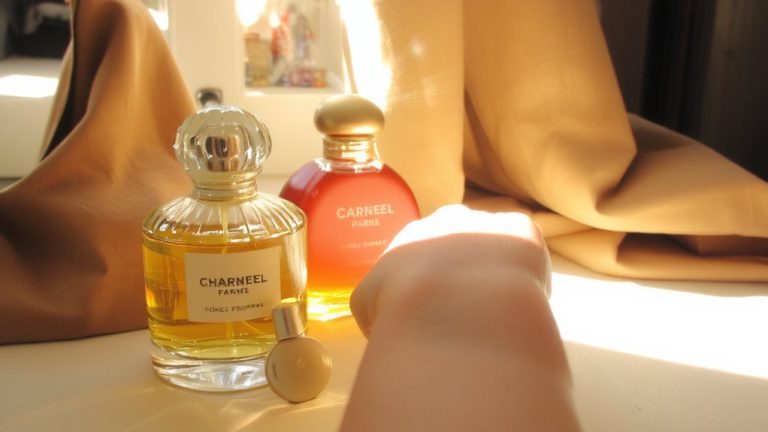
While shopping for perfume, skipping the skin test is a common mistake that can lead to mismatched scents and wasted money. Always test perfume directly on your skin-paper strips won’t show how fragrance molecules react with your unique skin chemistry. Apply no more than two or three scents at a time to prevent olfactory fatigue, which dulls your nose in 30–60 minutes. Target pulse points like wrists, neck, and behind the ears, where body heat helps release top notes, then heart notes, and finally base notes. Wait 5–10 minutes for the initial burst to fade. Reassess after 4–6 hours; base notes like vanilla or musk often deepen. Testing perfumes this way reveals how they truly evolve, so you choose one that lasts and layers well with your natural scent.
Match Your Skin Type to the Best Perfume Families
Your skin type isn’t just about texture or tone-it’s a game-changer when it comes to how perfume performs on you. If you have oily skin, higher sebum production helps lock in rich perfume families like oriental, musky, and leathery scents, boosting fragrance longevity. Dry skin lacks natural oils and tends to be more acidic, making citrus, ozonic, and green fragrance families fade faster-moisturizing beforehand helps slow evaporation of bright top notes. Combination skin needs balance, so opt for florals with woody bases to adapt to varying oil levels. Higher melanin levels often mean more oil and better scent retention, amplifying balsamic, sweet, and spicy notes. No matter your skin type, understanding your skin’s pH and sebum production means smarter choices in fragrance-so test, adjust, and wear with confidence.
How to Layer Scents for a Unique Signature Fragrance
What if your perfect scent isn’t a single bottle, but a blend uniquely tuned to your skin? Layering perfumes lets you create a signature fragrance that evolves with your body’s natural chemistry. Start with a neutral base-like Clean Reserve Skin-that matches your skin chemistry to anchor scent molecules. Then choose complementary scents from the same fragrance family, such as pairing CLEAN H2Eau Brilliant Peony with a musk for balance. Apply lighter top notes first-think Clean Reserve Acqua Neroli-followed by richer heart or base notes so the scent develops properly. Limit layering to two or three fragrances to avoid confusing the nose. Test combinations on pulse points, where warmth helps reveal how your skin chemistry transforms the scent. Wait 5–10 minutes, then track changes over hours. With practice, you’ll craft a unique scent that’s truly yours.
On a final note
You’ve got the power to make fragrance work for your skin, not against it. Dry skin? Layer a moisturizer before spraying to lock in scent for 6+ hours. Oily skin holds fragrance longer-opt for citrus or fresh notes to avoid heaviness. Always test on your wrists, wait 20 minutes, then check how it evolves. Avoid rubbing-heat alters the notes. Pair warm, spicy scents with cool skin tones, light florals with oily zones. Real testers say spraying on clothes extends wear to 10 hours, but skin application gives authenticity. Use pH-balancing lotions if scent turns sour-many found that Dove’s pH5 formula prevented metallic off-notes. With the right prep and pairing, your perfume won’t just sit on your skin-it’ll live with it, shifting subtly from morning to night, staying true through sweat, coffee breaks, and commute heat.